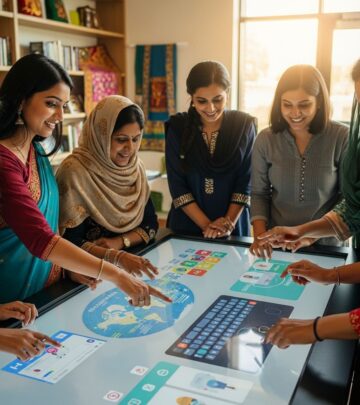
Digital Learning Initiatives in Latin America
Empowering young learners through creative technology integration and collaborative education strategies

Fostering Digital Competencies Through Innovative Educational Frameworks
The landscape of education technology continues to evolve rapidly across Latin American regions, with institutions increasingly recognizing the necessity of equipping students with contemporary digital capabilities. Rather than viewing technology as merely a modernization tool for traditional teaching methods, forward-thinking educators are reimagining how digital resources can create dynamic learning environments that encourage critical thinking, creativity, and student agency.
Understanding the Shift in Educational Philosophy
Contemporary educational approaches emphasize moving beyond surface-level technology adoption. The fundamental distinction lies in intentional integration rather than superficial implementation. When educators leverage digital tools purposefully, they unlock opportunities for students to become active participants in their own learning journeys rather than passive recipients of information. This philosophical shift represents a meaningful departure from conventional pedagogical models.
The transition toward student-centered, technology-enhanced environments reflects broader recognition that young learners require more than textbook knowledge to thrive in information-driven societies. Educational institutions must cultivate an ecosystem where technology serves as a catalyst for exploration, collaboration, and authentic problem-solving. This approach acknowledges that digital literacy encompasses far more than basic computer skills—it involves creative expression, critical evaluation of information, and responsible digital citizenship.
Building Sustainable Technology Infrastructure in Underserved Communities
One significant challenge facing educational advancement in many Latin American regions involves establishing reliable technological access in communities with limited resources. Implementing technology initiatives requires more than acquiring hardware; it demands thoughtful consideration of connectivity, ongoing technical support, teacher training, and curriculum adaptation. Educational programs must balance ambitious goals with practical realities of implementation in diverse socioeconomic contexts.
- Infrastructure development includes reliable internet connectivity and appropriate computing equipment
- Sustainability requires training programs that empower educators to confidently utilize technology
- Community engagement ensures initiatives align with local needs and cultural contexts
- Ongoing technical support maintains system functionality and prevents initiative collapse
- Resource allocation balances capital expenditures with operational maintenance costs
Interdisciplinary Approaches to Skill Development
Effective digital competency programs recognize that meaningful learning emerges through interconnected knowledge domains rather than isolated subject areas. Integrating multiple disciplines creates richer learning experiences and helps students understand real-world applications of theoretical concepts. When mathematics, language arts, sciences, and technology intersect meaningfully, students develop more comprehensive problem-solving capabilities.
Interdisciplinary frameworks encourage educators to design projects that naturally weave together different subject areas. A student researching environmental sustainability, for instance, might utilize data analysis tools (mathematics), research communication platforms (language arts), scientific methodology (sciences), and digital presentation software (technology). This integrated approach mirrors how professionals in various fields actually apply knowledge in workplace environments.
Participatory Methodologies in Learning Design
At the heart of contemporary educational innovation lies a commitment to participatory processes where students contribute meaningfully to curriculum development and learning goal-setting. Rather than educators unilaterally determining what students should learn, collaborative frameworks invite young learners to voice preferences, suggest projects, and guide inquiry directions. This democratic approach to education fosters greater engagement and ownership of learning outcomes.
When students participate in designing their educational experiences, several beneficial outcomes emerge. They develop stronger motivation because learning reflects their genuine interests. They cultivate metacognitive awareness by consciously reflecting on their learning preferences and strategies. They practice democratic participation skills that extend beyond classroom walls into broader civic engagement. Participatory approaches also surface diverse perspectives that might otherwise remain invisible in traditional top-down instructional models.
Democratizing Knowledge Access Through Digital Channels
Digital technologies possess unprecedented potential for democratizing access to educational resources and expert knowledge previously concentrated in privileged institutions. When educational initiatives strategically leverage these technologies, they can extend learning opportunities to students regardless of geographic location or socioeconomic status. Open educational resources, online collaborative platforms, and digital publication channels collectively create pathways toward more equitable knowledge distribution.
The democratization of knowledge extends beyond mere access to information. It encompasses enabling students to become creators and contributors rather than only consumers of content. When young learners publish their research, share their creative projects, and engage with audiences beyond their immediate classroom, they experience education as a participatory process of knowledge creation rather than passive information consumption.
Developing Academic Production and Reflection Practices
Educational initiatives that emphasize student academic production cultivate deeper learning than models focused primarily on content consumption. When students engage in systematic research, produce written work, create multimedia presentations, and present findings to authentic audiences, they develop professional communication skills alongside subject-matter expertise. These production-oriented practices create tangible artifacts of learning that students can reference and build upon throughout their educational trajectories.
Reflection accompanies valuable academic production. Students who systematically examine their thinking processes, document their learning journeys, and articulate insights derived from their work develop stronger metacognitive capabilities. Reflection practices might include research journals, portfolio documentation, peer feedback discussions, or individual conferencing. Through sustained reflection, students develop nuanced understanding of their own learning preferences, strengths, and areas for growth.
Creating Spaces for Knowledge Exchange and Dialogue
Educational programs increasingly recognize the value of creating dedicated spaces where students present their academic work and engage in substantive dialogue with peers and mentors. These forums for knowledge exchange serve multiple purposes—they celebrate student accomplishments, facilitate peer learning, practice public speaking skills, and model scholarly discourse. Such platforms transform education from isolated classroom activities into vibrant intellectual communities.
Knowledge exchange spaces might take various forms depending on institutional context and resources. Student symposiums, research conferences, digital publication platforms, and collaborative community events all serve similar functions of making learning visible and valuing student contributions. These spaces also create accountability mechanisms that motivate students toward higher-quality work because they know their efforts will receive authentic evaluation from meaningful audiences.
Teacher Training and Professional Development
The success of any technology-enhanced educational initiative depends fundamentally on educator preparation and ongoing professional development. Teachers require more than one-time training workshops; they need sustained support, access to learning communities, opportunities to experiment with new approaches, and space to reflect on their evolving practice. Professional development must address both technical competencies and pedagogical considerations related to technology integration.
Effective teacher training programs acknowledge that educators bring valuable existing expertise and may experience apprehension about adopting new tools. Training approaches that respect teacher agency, provide adequate practice time, and connect technology use to meaningful pedagogical outcomes prove more successful than top-down mandates. Peer mentoring, collaborative lesson design, and ongoing technical support create conditions where teachers develop confidence and enthusiasm for technology-enhanced instruction.
Measuring Educational Impact and Program Effectiveness
Evaluating the success of educational technology initiatives requires multifaceted assessment approaches that extend beyond standardized test scores. While academic achievement metrics provide valuable data, comprehensive program evaluation should also examine changes in student engagement, skill development trajectories, equity outcomes, and long-term benefits. Qualitative evidence—including student testimonials, portfolio documentation, and educator observations—contributes essential perspective alongside quantitative measures.
| Evaluation Dimension | Assessment Methods | Key Indicators |
|---|---|---|
| Academic Achievement | Pre/post assessments, portfolio review, project quality analysis | Knowledge gain, critical thinking improvement, research capabilities |
| Student Engagement | Participation observation, motivation surveys, attendance tracking | Voluntary participation rates, sustained effort over time, project completion |
| Skill Development | Competency rubrics, self-assessment, employer feedback | Digital literacy, collaboration abilities, communication effectiveness |
| Equity Outcomes | Disaggregated data analysis, access equity measures, outcome gaps | Participation parity, success distribution across demographics |
| Sustainability | Infrastructure assessments, budget analyses, stakeholder interviews | System maintenance capacity, resource continuity, institutional commitment |
Scalability and Replication Considerations
As educational technology initiatives demonstrate effectiveness in particular contexts, questions naturally arise regarding scalability and potential for replication in different settings. Successful scaling requires careful attention to local context factors that influenced original program success. What works effectively in one institutional environment may require significant adaptation when implemented elsewhere due to differences in resource availability, stakeholder composition, infrastructure capacity, and community priorities.
Programs seeking to expand or replicate successful models should document their essential elements while remaining flexible about implementation details. Core principles—such as participatory methodology, interdisciplinary integration, and emphasis on student agency—may transfer across contexts, while specific tools, timelines, and structures require localization. Effective scaling also involves building capacity among educators and administrators in receiving communities rather than imposing external solutions.
Addressing Digital Equity and Access Disparities
Despite potential for technology to democratize education, digital equity challenges persist across many regions. Students from economically disadvantaged backgrounds, rural areas, and marginalized communities often lack reliable internet connectivity, access to quality devices, and support systems necessary for full participation in technology-enhanced learning. Addressing these disparities requires multi-level interventions combining infrastructure development, device distribution, internet subsidies, and community partnership strategies.
Digital equity initiatives must also consider non-technological barriers to participation including digital literacy gaps, language challenges, disability accessibility needs, and cultural relevance of learning content. Comprehensive equity approaches engage community members in identifying barriers specific to their contexts and co-designing solutions that respect local knowledge and priorities. Sustainable digital equity requires ongoing commitment and resources rather than one-time projects or donations.
Integration with Community and Family Engagement
Educational initiatives achieve greater impact when they extend beyond classrooms to engage families and broader communities. Parent education programs help families understand the value of digital skill development and support student learning at home. Community partnerships create opportunities for authentic application of student learning to real-world challenges and enable local professionals to mentor young learners. Family and community involvement also builds social support systems that encourage student persistence through challenges.
Effective community integration requires culturally responsive approaches that respect diverse family structures, communication preferences, and educational values. Programs should provide multiple ways for families to engage rather than assuming uniform participation capacity. Translation services, flexible meeting times, and valuing of diverse forms of contribution increase family involvement across socioeconomic and linguistic backgrounds.
Future Directions for Educational Technology Development
As educational technology continues evolving, several promising directions merit attention. Artificial intelligence applications may eventually support personalized learning pathways while raising important questions about algorithmic bias and educational equity. Virtual and augmented reality technologies offer immersive learning experiences for subjects previously difficult to explore through traditional methods. Blockchain applications might enhance credential verification and increase recognition of informal learning achievements. Continued emphasis on teacher agency, student voice, and equity considerations should guide technological innovation rather than allowing technological capabilities to determine educational practice.
The future of education technology depends not on pursuing newest innovations but on maintaining clear commitment to equitable access, authentic student engagement, and meaningful learning outcomes. Technology serves education best when implemented thoughtfully in service of human development and democratic values rather than as an end in itself.
References
- Digital Competencies in Education: Framework for Integration — UNESCO Institute for Information Technologies in Education. 2023-06-15. https://iite.unesco.org/
- Democratizing Knowledge Through Technology in Latin America — Inter-American Development Bank Education Division. 2023-09-20. https://www.iadb.org/en/topics/education
- Student-Centered Learning and Digital Integration: Best Practices — International Society for Technology in Education (ISTE). 2024-02-10. https://www.iste.org/
- Educational Equity in the Digital Age: Bridging Access Disparities — World Bank Education Global Practice. 2023-11-08. https://www.worldbank.org/en/topic/education
- Teacher Professional Development for Technology Integration — Organisation for Economic Co-operation and Development (OECD). 2023-03-22. https://www.oecd.org/education/
Similar Articles








Read full bio of Sneha Tete