Bridging the Digital Divide for South Asian Women
How technology access and digital skills transform economic opportunities for women across South Asia
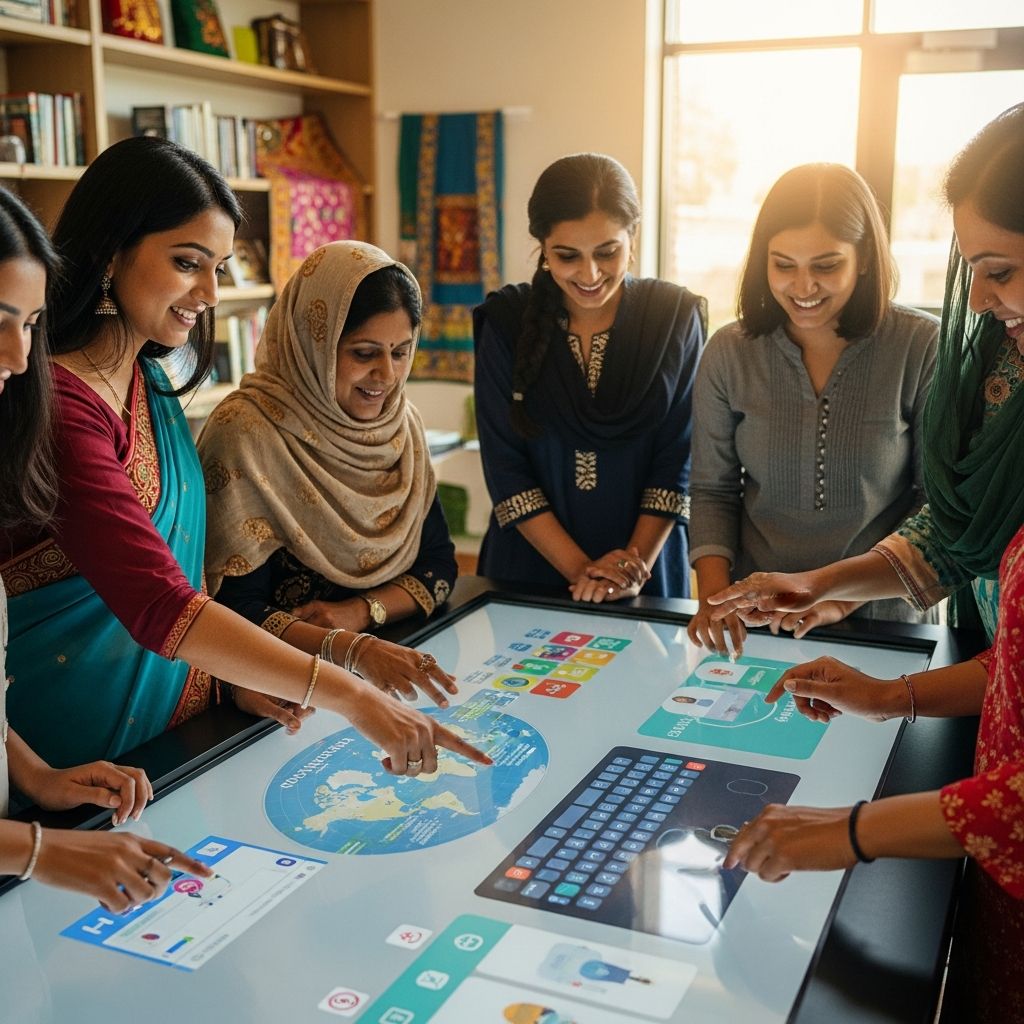
Bridging the Digital Divide for South Asian Women: Technology as a Catalyst for Economic Transformation
The digital landscape in South Asia presents both significant challenges and extraordinary opportunities for women seeking economic independence and professional growth. While technological advancement has swept across the region, women continue to face disproportionate barriers to accessing these transformative tools and acquiring the skills necessary to leverage them effectively. The convergence of internet connectivity, digital literacy programs, and innovative business platforms is gradually reshaping economic possibilities for millions of South Asian women, though substantial gaps remain.
Understanding the Current Digital Landscape and Gender Disparities
South Asia stands at a critical juncture in its digital evolution. The region has witnessed rapid expansion of internet infrastructure and mobile technology adoption over the past decade, yet women continue to lag behind men in both access and utilization of digital resources. Research indicates that women in South Asia are approximately 31% less likely to use mobile internet compared to their male counterparts, representing a persistent gap that limits economic participation and professional advancement.
This digital gender divide extends beyond mere connectivity statistics. The gap encompasses access to devices, affordability of data plans, digital literacy competency, and cultural factors that influence technology adoption patterns. Many women in rural and semi-urban areas face compounded challenges, including limited awareness of digital opportunities, insufficient infrastructure, and societal expectations that prioritize offline roles over digital engagement.
The Foundation: Digital Literacy as the Gateway to Economic Empowerment
Digital literacy serves as the fundamental cornerstone upon which all other forms of technological empowerment are built. Beyond basic computer skills, comprehensive digital literacy encompasses internet navigation, online safety awareness, digital communication tools, and platform-specific knowledge necessary for business operations. For South Asian women, developing these competencies opens pathways to employment, entrepreneurship, and financial independence previously unavailable in traditional economies.
The transformation begins with foundational understanding. Women must first grasp how digital tools function, what opportunities they present, and how to navigate online environments safely and effectively. This foundational knowledge then enables progression toward more sophisticated applications, including e-commerce management, digital marketing strategies, financial technology platforms, and global market participation.
Multi-Layered Approach to Skill Development
Effective digital literacy initiatives in South Asia employ graduated, multi-layered approaches that accommodate varying starting points and learning speeds. Programs typically begin with fundamental computer operation and internet basics, progressing toward specialized applications relevant to participants’ chosen fields or business interests. This scaffolded approach ensures that women can build confidence and competency incrementally rather than facing overwhelming complexity from the outset.
Training methodologies increasingly incorporate practical, hands-on components combined with theoretical understanding. Participants learn through direct engagement with actual platforms and tools, receiving immediate feedback and troubleshooting support. This experiential learning approach proves more effective than purely lecture-based instruction, particularly for adult learners returning to education after extended absence.
E-Commerce Platforms: Democratizing Market Access
One of the most transformative applications of digital technology for South Asian women entrepreneurs involves e-commerce platforms specifically designed to reduce barriers to market participation. These platforms eliminate traditional requirements for physical storefronts, substantial capital investment, and geographic limitations, allowing women to establish businesses from home with minimal startup costs.
The concept of achieving maximum profitability through minimal investment has profound implications for women entrepreneurs, particularly those from economically disadvantaged communities and least-developed countries within the region. Digital platforms enable women to display products, manage inventory, process transactions, and communicate with customers entirely online, fundamentally altering the business landscape for those with limited access to traditional commercial infrastructure.
Expanding Regional and Global Trade Networks
Beyond domestic markets, e-commerce platforms facilitate participation in regional and international supply chains. South Asian women entrepreneurs can now connect with buyers across borders, access larger customer bases, and participate in economic networks previously restricted by geography and capital constraints. This expanded market access generates revenue growth opportunities and accelerates business scaling.
The South-South cooperation model particularly benefits women entrepreneurs in developing nations. Platform initiatives that connect women business owners across South Asia create knowledge-sharing opportunities, enable bulk purchasing for cost reduction, and foster collaborative networks that strengthen individual entrepreneurial capacity. These regional connections create mutual support systems and collective bargaining power previously unavailable to isolated individual entrepreneurs.
Institutional Support and Multi-Stakeholder Collaboration
Sustainable progress in women’s digital empowerment requires coordinated effort across multiple institutional sectors. Government agencies, international organizations, civil society groups, educational institutions, and private sector entities all contribute essential components to comprehensive ecosystem development. No single institution possesses sufficient resources or expertise to address all dimensions of this challenge independently.
Government Initiatives and Policy Frameworks
Governments across South Asia have launched numerous programs specifically targeting digital inclusion and women’s economic participation. These initiatives encompass digital literacy subsidies, financial inclusion schemes, entrepreneurship training programs, and policy reforms designed to reduce regulatory barriers for women business operators. Government involvement provides essential foundational support, including infrastructure investment, curriculum development, and credibility that encourages broader participation.
Civil Society and Grassroots Organizations
Community-based organizations bring intimate knowledge of local contexts, cultural sensitivities, and specific barriers affecting women in particular geographic areas. These groups deliver localized training, provide mentorship and support networks, and connect women entrepreneurs with resources and opportunities tailored to their specific circumstances. Civil society organizations often reach women in remote areas that larger institutional programs might overlook.
International Development Organizations and United Nations Agencies
Multinational development institutions contribute specialized expertise, financial resources, and coordinating functions that link national and regional initiatives. These organizations facilitate cross-border knowledge transfer, develop standardized training materials, provide technical assistance, and document best practices that can be replicated and scaled across the region.
Digital Platforms for Economic Inclusion: From Learning to Earning
The transition from acquiring digital skills to monetizing those skills requires accessible pathways and supportive infrastructure. Comprehensive digital empowerment strategies incorporate multiple stepping stones from initial learning through actual income generation.
E-Learning and Online Skill Development
Web-based educational platforms democratize access to training resources, enabling women to learn at their own pace and on schedules compatible with existing family and work obligations. Online courses covering e-commerce fundamentals, digital marketing strategies, financial technology, and specialized business skills complement traditional classroom instruction. These platforms reach geographically dispersed populations and accommodate learners unable to attend fixed-location training sessions.
Social Media as Commercial Channels
Mainstream social media platforms have evolved from purely social communication tools into legitimate commercial channels. Women entrepreneurs leverage Facebook, Instagram, and other platforms to display products, engage with potential customers, conduct transactions, and build brand presence with minimal additional investment. Social media provides low-cost visibility for women-led businesses that might lack resources for traditional advertising.
Financial Technology Access
Digital financial services including mobile banking, digital wallets, and fintech solutions extend financial system participation to populations previously excluded due to geographic or documentation barriers. Women entrepreneurs can access credit, process transactions, manage cash flow, and build financial records entirely through digital channels, reducing dependency on traditional banking infrastructure concentrated in urban centers.
Addressing Systemic Barriers and Gender-Specific Challenges
While digital technology provides powerful tools for economic empowerment, realizing this potential requires explicitly addressing barriers that disproportionately affect women. Successful initiatives recognize that technology alone cannot overcome structural disadvantages; rather, technology operates most effectively within supportive ecosystems that actively address gender-specific obstacles.
Capital Access and Financial Barriers
Women entrepreneurs in South Asia frequently struggle to access startup capital and expansion funding due to limited collateral, discrimination in lending practices, and underestimation of women-led business viability by financial institutions. Initiatives addressing this barrier include microfinance programs, targeted lending schemes, grants specifically for women entrepreneurs, and mentorship connecting women business leaders with investors and funding sources.
Regulatory and Compliance Complexity
Navigating business registration, tax compliance, labor law, and regulatory frameworks presents challenges particularly acute for women lacking prior business experience or professional networks. Training programs addressing these dimensions demystify regulatory requirements, provide step-by-step guidance through bureaucratic processes, and connect women entrepreneurs with legal and financial professionals who can facilitate compliance.
Gender Bias and Cultural Expectations
Deeply embedded cultural attitudes regarding women’s roles, family responsibilities, and appropriate economic participation create psychological and social barriers to entrepreneurship. Comprehensive empowerment strategies address these dimensions through community engagement, awareness programs, peer mentorship from successful women entrepreneurs, and family education highlighting benefits of women’s economic participation for household wellbeing and community development.
Building Sustainable and Scalable Ecosystems
Temporary projects and time-limited initiatives produce limited lasting impact. Sustainable transformation requires building ecosystems capable of self-perpetuation and continuous improvement beyond initial program funding cycles.
Regional Networking and Knowledge Exchange
Formalized networks connecting women entrepreneurs, educators, policymakers, and support organizations across South Asia facilitate ongoing knowledge exchange, collaborative problem-solving, and collective advocacy. These networks operate through regular meetings, online platforms, joint research initiatives, and coordinated campaigns addressing sector-wide challenges. Regional cooperation accelerates learning by enabling communities to benefit from innovations and successes elsewhere in the region.
Integration into Formal Education Systems
Embedding digital entrepreneurship and financial literacy into school curricula ensures that younger generations develop these competencies early, before cultural expectations or limited aspirations constrain career imagination. School-based programs introduce girls to information and communication technology, cultivate interest in technology fields, and demonstrate concrete pathways from technical skills to economic opportunity.
Private Sector Engagement and Corporate Partnerships
Technology companies, financial institutions, and established businesses possess resources, platforms, and market expertise essential for scaled impact. Corporate partnerships provide platforms for women entrepreneurs to reach customers, access subsidized or free training tools, participate in incubation programs, and connect with investor networks. Private sector involvement also generates employment opportunities for women across the technology sector value chain, from technical roles to business development and management positions.
Measuring Impact and Ensuring Accountability
Effective ecosystem development requires robust monitoring and evaluation systems that track progress toward established objectives and enable continuous refinement of strategies.
| Impact Dimension | Key Metrics | Data Sources |
|---|---|---|
| Digital Access | Internet connectivity rates, device ownership, data plan affordability | Household surveys, telecom usage data |
| Skill Development | Training program participation, certification rates, skill assessments | Program records, participant surveys |
| Economic Participation | Business registration rates, employment in digital sectors, income generation | Business registries, employment data, participant follow-up |
| Social Impact | Community awareness, gender attitude shifts, family support levels | Community surveys, qualitative interviews |
Frequently Asked Questions
What specific barriers prevent South Asian women from accessing digital technology?
Barriers include limited device ownership, high data costs relative to income, inadequate infrastructure in rural areas, insufficient digital literacy, time constraints from family responsibilities, cultural restrictions on women’s public engagement, and discrimination in access to credit for technology purchases. Geographic dispersion, language limitations in available training, and lack of awareness about opportunities contribute to the complexity.
How can women entrepreneurs without formal business experience begin utilizing e-commerce platforms?
Comprehensive training programs guide newcomers through platform registration, product listing creation, transaction management, and customer communication. Mentorship from experienced women entrepreneurs, peer learning groups, and step-by-step video tutorials reduce intimidation factors. Many platforms offer customer support specifically for new sellers, and programs increasingly provide one-on-one coaching alongside group training.
What role do governments play in advancing women’s digital empowerment?
Government contributions include infrastructure investment ensuring reliable internet access, digital literacy program funding, tax incentives for women entrepreneurs, subsidized technology purchases, financial inclusion initiatives, policy reforms reducing regulatory burdens, and integration of digital skills into public education curricula. Government legitimacy and resources enable programs at scale that individual organizations cannot achieve independently.
How can cultural barriers to women’s entrepreneurship be effectively addressed?
Successful approaches combine awareness campaigns demonstrating economic benefits of women’s participation, peer mentorship from respected women entrepreneurs within communities, family engagement programs, religious and community leader involvement endorsing women’s economic participation, and gradual normalization through increased visibility of successful women business owners. Change occurs through multiple reinforcing channels rather than single interventions.
Conclusion: Toward Inclusive and Sustainable Digital Futures
The digital transformation of South Asia presents unprecedented opportunities for women’s economic empowerment, yet realizing this potential demands sustained commitment to addressing multidimensional barriers through coordinated, multi-stakeholder approaches. Digital literacy, e-commerce access, and supportive institutional environments collectively create conditions enabling women to establish businesses, generate income, and participate meaningfully in regional and global economies.
Progress to date demonstrates that technological solutions, when combined with targeted skill development, policy reforms, and deliberate attention to gender-specific challenges, generate tangible improvements in women’s economic participation and household wellbeing. Continued expansion of these initiatives, increased investment in digital infrastructure for underserved areas, and deeper integration of digital skills into formal education will accelerate momentum toward genuinely inclusive digital economies across South Asia.
The ultimate measure of success extends beyond statistics on connectivity and training participation. True empowerment means women confidently navigating digital environments, controlling economic resources through business ownership, accessing global markets, and exercising agency over their economic futures. South Asia’s development trajectory depends substantially on realizing the productive potential of half its population through deliberate, sustained commitment to digital inclusion and gender equality.
References
- Empowering South Asian Women Entrepreneurs through Digital Technology — United Nations Economic and Social Commission for Asia and the Pacific (UNESCAP). 2019-2022. https://ssc-connector.escap.un.org/goodpractices/
- Empowering women digital entrepreneurs in South Asia — UN Trade and Development (UNCTAD). 2023. https://unctad.org/news/empowering-women-digital-entrepreneurs-south-asia
- Why we must close South Asia’s digital gender divide — World Economic Forum. September 2024. https://www.weforum.org/stories/2024/09/south-asia-digital-gender-divide/
- Impact of ICT on women empowerment in South Asia — Latin American and Caribbean Economic Association. 2015. https://ideas.repec.org/a/lrc/lareco/v3y2015i3p80-90.html
- Connecting South Asian Women to the Digital Economy — United Nations Economic and Social Commission for Asia and the Pacific (UNESCAP). https://southsouth-galaxy.org/solutions/detail/empowering-south-asian-women-entrepreneurs-through-digital-technology/
Similar Articles







Read full bio of Sneha Tete