Data Center
Discover the backbone of modern computing: secure facilities powering global data processing and digital services worldwide.
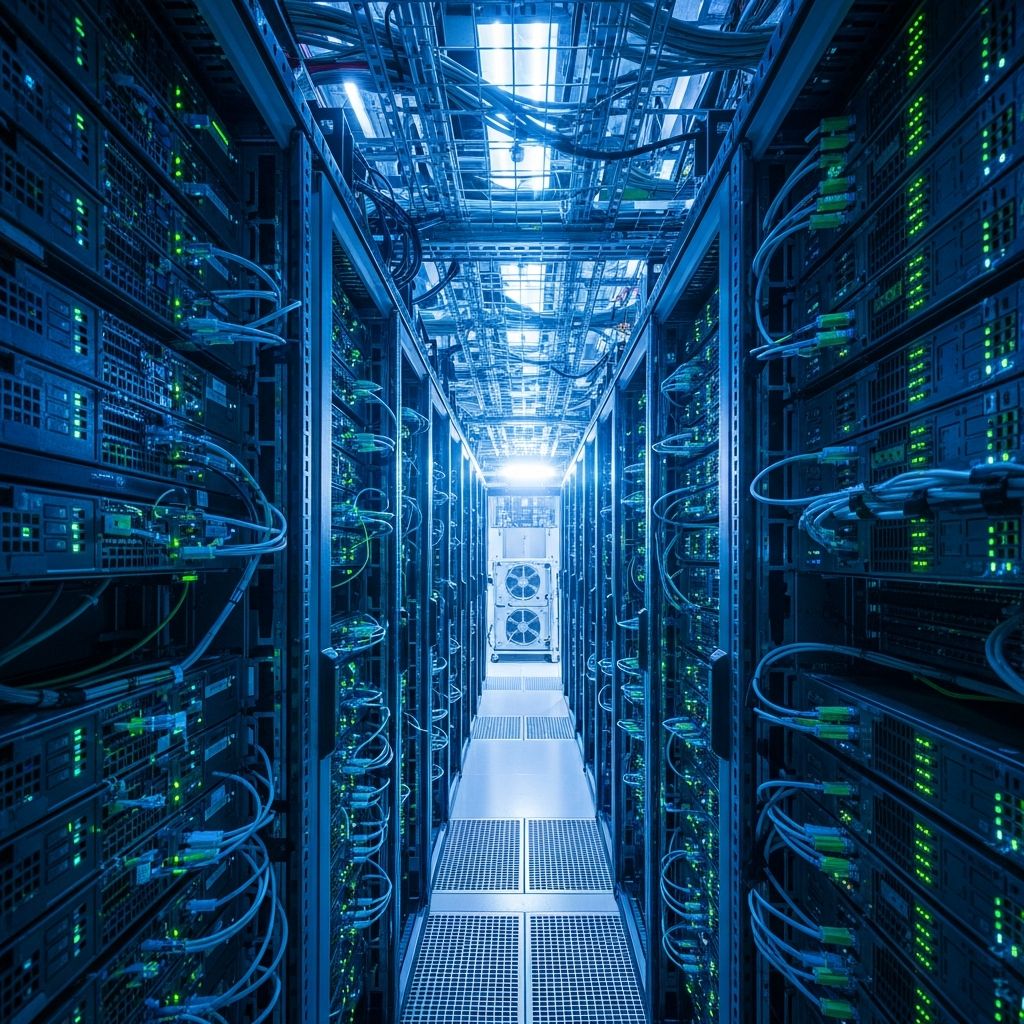
Data centers represent the foundational pillars of today’s digital landscape, serving as massive, highly controlled environments where the world’s data is stored, processed, and transmitted. These facilities are far more than just rooms filled with computers; they are engineered ecosystems designed to ensure uninterrupted access to information and applications for billions of users and enterprises alike. In an era where cloud computing, artificial intelligence, and streaming services dominate, understanding data centers is key to grasping how the internet functions at scale.
The Fundamental Role of Data Centers in Digital Operations
At their core, data centers provide the physical and logical infrastructure necessary for running modern IT workloads. They house thousands of servers that perform computations, manage vast datasets, and facilitate communication across global networks. Without these hubs, services like video streaming, online banking, e-commerce, and social media would grind to a halt. Organizations rely on data centers to achieve low-latency access, robust security, and scalability to handle fluctuating demands.
These facilities are strategically located to minimize delays, often near major internet exchange points or undersea cables. Their design prioritizes redundancy, allowing operations to continue even during power outages or hardware failures. As digital transformation accelerates, data centers have evolved from on-premises server rooms to hyperscale complexes operated by tech giants and specialized providers.
Essential Hardware Components Powering Data Centers
The heart of any data center beats within its computing hardware. Servers form the primary workforce, categorized into rack-mounted units for dense packing, blade servers for modularity, and specialized GPUs for AI tasks. These machines process requests, run applications, and execute algorithms at blistering speeds.
- Rack Servers: Standard 19-inch units stacked in cabinets, ideal for general-purpose computing.
- Blade Servers: Compact, shared-resource designs that maximize space efficiency.
- High-Performance Computing (HPC) Nodes: Equipped with accelerators for machine learning and simulations.
Storage systems complement servers by preserving data integrity over time. Modern setups blend solid-state drives (SSDs) for rapid access with hard disk drives (HDDs) for cost-effective capacity. Advanced solutions like storage area networks (SANs) and network-attached storage (NAS) enable shared access across clusters.
Networking: The Connectivity Lifeline
Networking equipment ensures seamless data flow within and beyond the data center. High-speed switches and routers direct traffic, while load balancers distribute workloads to prevent bottlenecks. Firewalls and intrusion detection systems safeguard against cyber threats.
Fiber optic cabling forms the backbone, supporting speeds up to 400 Gbps per port. Software-defined networking (SDN) adds flexibility, allowing dynamic reconfiguration without physical rewiring. Connectivity to the wider internet occurs via peering with ISPs and content delivery networks (CDNs), reducing latency for end-users.
Power Systems: Ensuring Uninterrupted Energy Supply
Reliable power is non-negotiable, as even brief outages can cost millions. Data centers employ multi-layered power architectures:
- Primary Feeds: Connections to utility grids with diverse sources.
- Uninterruptible Power Supplies (UPS): Battery banks bridging short gaps.
- Backup Generators: Diesel or natural gas units for extended blackouts.
- Power Distribution Units (PDUs): Precise metering and remote control.
According to the International Energy Agency, data centers accounted for about 1-1.5% of global electricity in recent years, with projections rising due to AI demands.1 Efficiency measures like renewable integration and power usage effectiveness (PUE) ratings below 1.2 are now standard.
Cooling Technologies: Managing Thermal Challenges
Hardware generates immense heat—up to 100 kW per rack in dense setups. Cooling systems counteract this to maintain optimal temperatures (typically 18-27°C). Traditional air-based methods use computer room air handlers (CRAH) and hot/cold aisle containment.
| Cooling Method | Description | Efficiency |
|---|---|---|
| Air Cooling | CRAC units with raised floors | PUE 1.2-1.5 |
| Liquid Cooling | Direct-to-chip or immersion | PUE <1.1 |
| Free Cooling | Outside air in cold climates | Highly variable |
Emerging liquid cooling submerges components in non-conductive fluids, slashing energy use by 40% in some cases, as demonstrated by Google’s implementations.2
Security Measures: Physical and Digital Fortifications
Layered security protects assets. Physical barriers include mantraps, biometric scanners, and 24/7 surveillance. Digital defenses encompass encryption, multi-factor authentication, and zero-trust architectures.
Compliance with standards like ISO 27001 and SOC 2 ensures audited practices. The ANSI/TIA-942 standard defines tiers from basic (Tier 1) to fault-tolerant (Tier 4), with higher tiers offering N+1 or 2N redundancy.3
Management and Automation Tools
Data Center Infrastructure Management (DCIM) software unifies oversight, tracking power, capacity, and performance in real-time. AI-driven analytics predict failures, optimize layouts, and automate provisioning. Tools like those from major vendors provide dashboards for proactive maintenance, reducing downtime by up to 70%.4
Types of Data Centers and Their Applications
Data centers vary by scale and purpose:
- Enterprise: On-site or colocation for corporate needs.
- Colocation: Shared facilities with customer cages.
- Hyperscale: Massive builds by cloud providers like AWS, handling petabytes.
- Edge: Smaller nodes near users for IoT and 5G.
Hyperscale centers, often exceeding 100 MW, power AI training and global services.
Future Trends Shaping Data Centers
Sustainability drives adoption of green energy, with commitments to carbon neutrality by 2030 from leaders like Microsoft. Modular designs allow rapid scaling, while quantum-resistant encryption prepares for post-quantum threats. 5G and edge computing decentralize loads, complementing central hubs.
Challenges and Innovations
Key hurdles include energy consumption (415 TWh globally in 2024) and water use for cooling.5 Innovations like advanced batteries and photonic computing promise efficiency leaps. Supply chain issues for chips underscore the need for diversified sourcing.
FAQs
What is a data center?
A secure facility housing IT equipment for data storage, processing, and networking.
How do data centers stay online 24/7?
Through redundant power, cooling, and failover systems per TIA-942 tiers.
Are data centers energy-efficient?
Modern ones target PUE under 1.2 using AI optimization and renewables.
What role do CDNs play with data centers?
CDNs cache content at edge data centers for faster global delivery.
Who operates the largest data centers?
Hyperscalers like Google, AWS, and Microsoft with facilities over 1 million sq ft.
References
- Electricity 2024 Analysis and Forecast to 2026 — International Energy Agency. 2024-03-01. https://www.iea.org/reports/electricity-2024
- Data center infrastructure — Atlas Systems. 2024-10-15. https://www.atlassystems.com/blog/data-center-infrastructure
- What is a Data Center — Cisco Systems. 2023-05-12. https://www.cisco.com/site/us/en/learn/topics/computing/what-is-a-data-center.html
- What is a data center? — McKinsey & Company. 2024-07-20. https://www.mckinsey.com/featured-insights/mckinsey-explainers/what-is-a-data-center
- What Is a Data Center? — IBM Corporation. 2024-02-28. https://www.ibm.com/think/topics/data-centers
Similar Articles




Read full bio of Sneha Tete