Community Networks and Radio Unite for Internet Access
How local radio stations and grassroots networks are collaborating to deliver internet to remote villages worldwide.
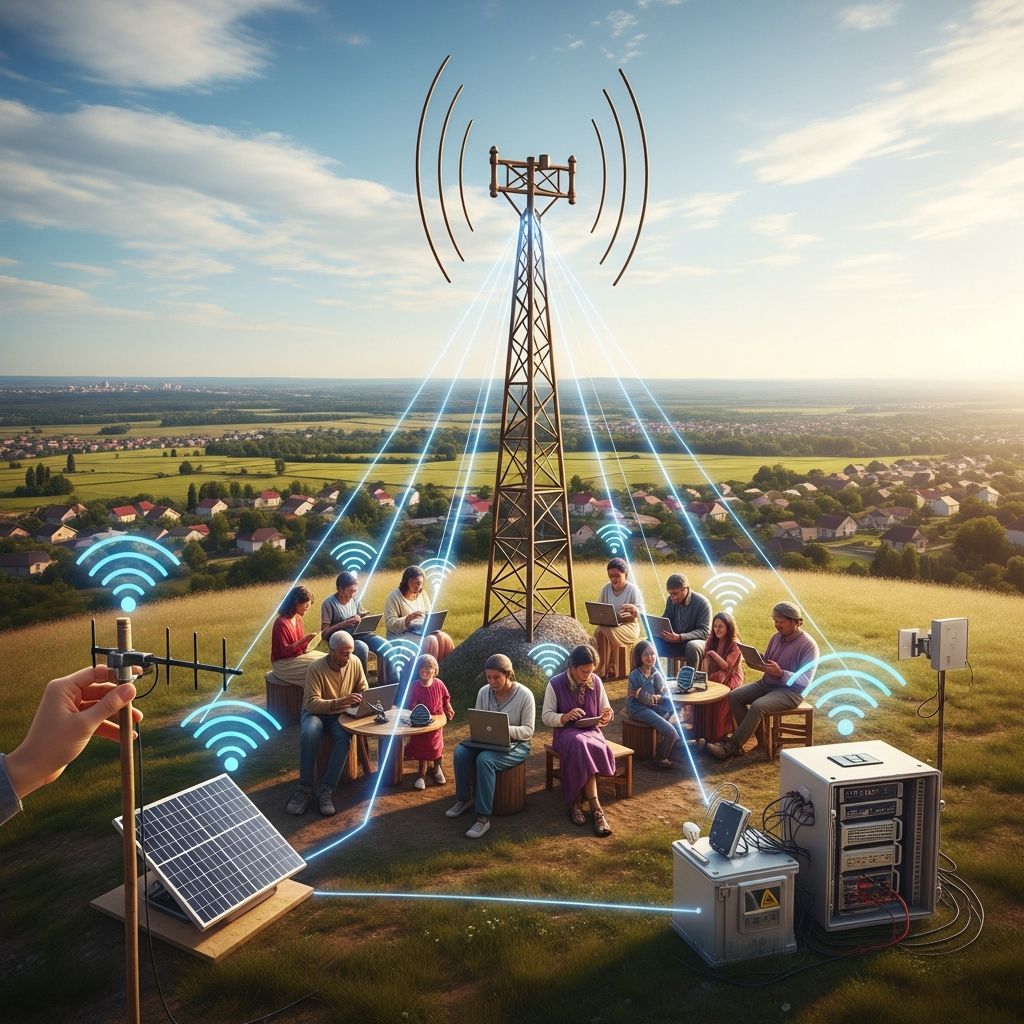
In an era where digital connectivity is essential for education, healthcare, and economic opportunity, millions worldwide remain offline. Rural villages and remote areas often lack infrastructure from commercial providers due to high costs and low profitability. However, innovative collaborations between community radio stations and grassroots network builders are changing this narrative. These partnerships leverage existing local media infrastructure to extend internet services, fostering self-sustaining digital ecosystems managed by residents themselves.
The Power of Local Collaboration in Digital Expansion
Community radio has long served as a vital communication lifeline in isolated regions, delivering news, education, and entertainment without relying on expansive commercial broadcasting. With audiences already tuned in and trust established, these stations are ideally positioned to spearhead internet rollout. By partnering with network providers, they introduce broadband capabilities using simple, affordable tools like wireless routers and open-source software.
This model emphasizes community ownership. Residents contribute labor, resources, and knowledge, ensuring networks reflect local needs. Unlike top-down corporate deployments, these initiatives build resilience and adaptability, with locals trained to troubleshoot and expand coverage.
- Utilizes existing radio towers for signal boosting.
- Employs low-cost hardware accessible to small budgets.
- Promotes digital literacy through integrated training programs.
Grassroots Networks: Building from the Ground Up
Community networks are bottom-up efforts where groups pool resources to create shared internet infrastructure. Often starting with a single wireless access point, they grow organically as more households join. Key to their success is simplicity: no need for specialized engineers, just basic tech savvy and enthusiasm.
These networks serve multiple purposes beyond web access. They enable local content sharing, voice calls over IP, and even streaming of community radio online, creating a multimedia hub. In areas with no mobile coverage, they become the primary conduit for information, empowering users to bypass traditional gatekeepers.
| Feature | Traditional ISP | Community Network |
|---|---|---|
| Cost | High deployment fees | Affordable, shared model |
| Control | Corporate managed | Community governed |
| Sustainability | Profit-driven | Needs-based, resilient |
| Speed to Deploy | Slow in rural areas | Rapid with local buy-in |
Real-World Success Stories Driving Change
Across continents, these alliances have lit up dark digital spots. In Latin America, groups like AlterMundi have wired remote towns using free software and recycled hardware, connecting schools and clinics. Africa sees similar triumphs, with radio stations in Kenya and South Africa extending FM signals to Wi-Fi hotspots, serving thousands.
In the U.S., municipal and tribal broadband efforts mirror this, with over 900 community networks challenging monopolies and delivering gigabit speeds affordably.1 The Yurok Tribe, for instance, built its own fiber network, boosting education and jobs where providers refused service.
These examples prove scalability: from a single village to regional meshes linking multiple sites, all while keeping costs under $100 per connection point.
Training and Capacity Building: Keys to Longevity
Sustainable connectivity demands skilled locals. Partnerships prioritize workshops where radio operators learn network setup alongside aspiring ‘net keepers.’ Curriculum covers spectrum basics, security, and maintenance, often delivered via radio broadcasts for wider reach.
Digital literacy extends to end-users: safe browsing, app usage, and content creation. This holistic approach turns passive recipients into active participants, spawning local apps, e-commerce, and telehealth services.
- Assess community needs and topography.
- Secure spectrum licenses if required.
- Install core nodes on radio towers.
- Train 10-20 locals per 100 users.
- Monitor and expand iteratively.
Overcoming Regulatory and Technical Hurdles
Challenges persist: regulatory red tape, spectrum scarcity, and power instability. Solutions include advocating for unlicensed bands and solar-powered repeaters. Organizations like the Internet Society push policies favoring community builds, citing their role in UN Sustainable Development Goals.
Technical innovations like mesh networking allow self-healing topologies, where nodes reroute traffic automatically. Open hardware from projects like LibreRouter democratizes access further.
Future Prospects: Scaling Global Impact
With billions offline, momentum builds. Governments allocate funds like the U.S. BEAD program, awarding billions for rural broadband, often prioritizing community models.2 International bodies like the APC highlight transitions from telecenters to full networks, enhancing services.3
Imagine: radio stations streaming globally while providing village Wi-Fi. AI tools could optimize routing, VR enable remote learning. The synergy promises universal access, but requires sustained investment in people over hardware.
FAQs: Community Networks and Radio Partnerships
- How much does it cost to start a community network?
- Typically $50-200 per access point, shared across users, far cheaper than commercial alternatives.
- Do you need technical expertise?
- No—training is provided, focusing on plug-and-play setups with user-friendly software.
- Can these networks handle video streaming?
- Yes, modern meshes support 4G-equivalent speeds for multiple households.
- What about security?
- Open-source firewalls and community monitoring ensure robust protection.
- How do radio stations benefit?
- Expanded audience via online streaming, new revenue from internet services.
This movement redefines connectivity as a communal right, not a commodity. By uniting voices of radio with threads of networks, underserved areas step into the digital age, equipped and empowered.
References
- Community Broadband — New America. 2023. https://www.newamerica.org/insights/community-broadband/
- Roanoke County Rural Broadband Initiative — Roanoke County, VA Government (.gov). 2024-05-09. https://www.roanokecountyva.gov/2802/Roanoke-County-Rural-Broadband-Initiativ
- A pathway towards community access: From telecentres to community networks — Association for Progressive Communications (APC). 2020-01-15. https://www.apc.org/en/news/pathway-towards-community-access-telecentres-community-networks
- Internet Society Community Networks — Internet Society. 2020-01-10. https://www.internetsociety.org/blog/2020/01/community-radio-and-network-providers-join-force-to-grow-the-internet/
Similar Articles







Read full bio of medha deb