Cloud Storage Explained
Discover how cloud storage revolutionizes data management with scalability, security, and global access for businesses and individuals alike.
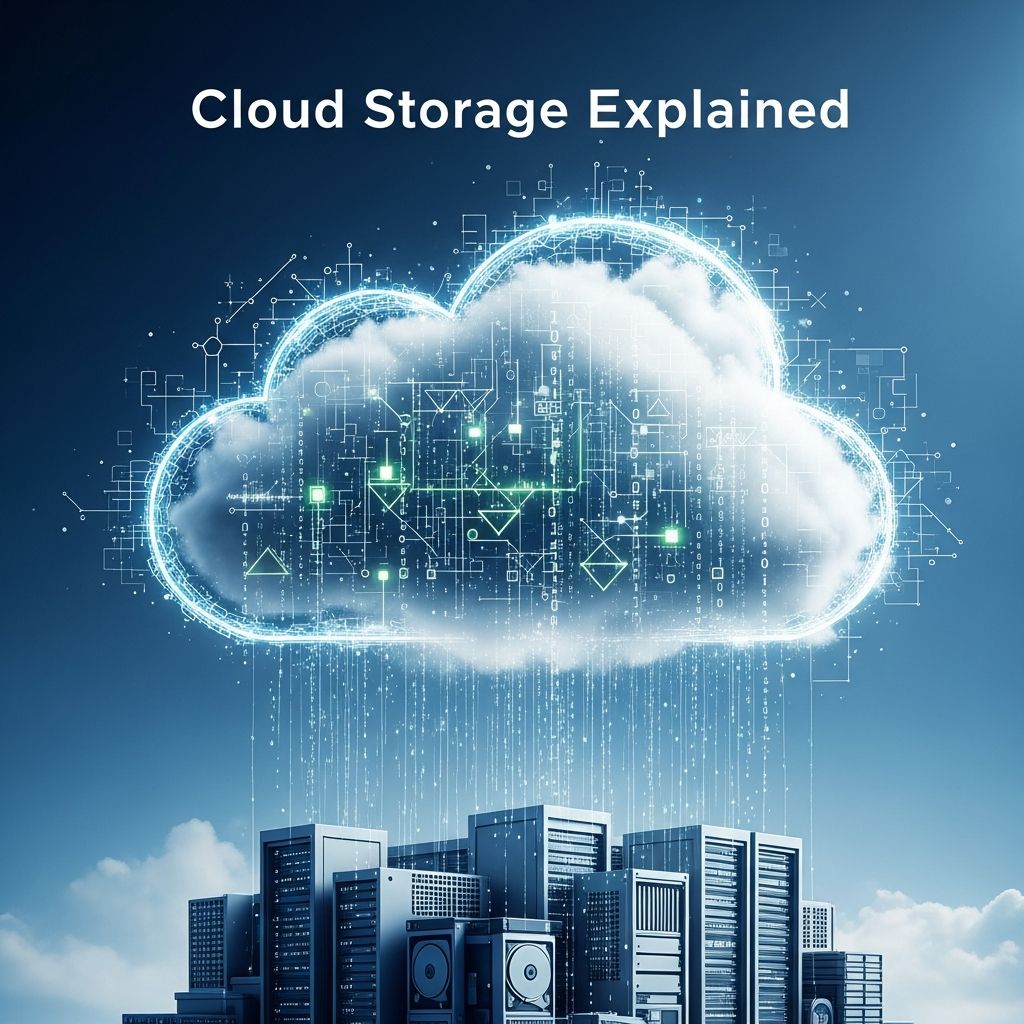
Modern data management has evolved dramatically with the advent of cloud storage solutions. Unlike traditional methods that rely on physical hardware like hard drives and tapes, cloud storage leverages a distributed network of remote servers to host digital information. This approach allows users to store vast amounts of data—ranging from personal photos to enterprise-level databases—without the burdens of on-site infrastructure maintenance. Providers handle everything from hardware upkeep to security protocols, enabling seamless access from anywhere with an internet connection.
The Core Concept of Cloud-Based Data Hosting
At its heart, cloud storage represents a shift from localized to distributed data repositories. When you upload a file, it doesn’t reside on a single device; instead, it’s fragmented, encrypted, and dispersed across multiple servers in various geographic locations. This distribution ensures high availability and fault tolerance. If one server fails, others pick up the slack, maintaining uninterrupted service.
Data transmission occurs over secure internet protocols. Users interact via intuitive interfaces such as web dashboards, desktop applications, or mobile apps. Behind the scenes, application programming interfaces (APIs) facilitate programmatic access, making it ideal for developers integrating storage into custom software.
Key Components Driving Cloud Storage Functionality
Cloud storage systems comprise several interconnected elements:
- Storage Servers: Physical machines equipped with high-capacity drives, often using solid-state drives (SSDs) for speed and traditional hard disk drives (HDDs) for cost-effective bulk storage.
- Data Centers: Secure facilities housing thousands of servers, complete with redundant power supplies, cooling systems, and advanced networking.
- Virtualization Layer: Software that abstracts physical resources into scalable virtual pools, allowing dynamic allocation based on demand.
- Management Software: Tools for monitoring performance, enforcing policies, and automating backups and replication.
These components work in unison to deliver elastic capacity. As storage demands fluctuate, providers automatically provision additional resources, eliminating the need for manual intervention.
Primary Categories of Cloud Storage Architectures
Cloud storage manifests in three distinct forms, each suited to specific needs:
Object Storage: Unstructured Data Powerhouse
Object storage treats files as discrete objects, each with unique metadata and a global identifier. This model excels with unstructured data like videos, images, and logs. Providers such as Amazon S3 and Google Cloud Storage pioneered this, offering massive scalability—up to exabytes—without hierarchical file systems. Access is via HTTP, simplifying global distribution.
File Storage: Familiar Networked Access
Resembling traditional network-attached storage (NAS), file storage presents data in a hierarchical structure of directories and files. Protocols like NFS and SMB enable seamless integration with existing applications. It’s perfect for shared workspaces requiring collaborative editing, such as content management systems.
Block Storage: High-Performance Volumes
Block storage operates at the lowest level, presenting raw storage blocks to virtual machines or databases. This provides low-latency performance akin to local disks, ideal for demanding workloads like transactional databases or virtual desktops. Services like AWS EBS exemplify this category.
Deployment Strategies for Cloud Storage
Organizations choose from several deployment models based on control, cost, and compliance requirements.
- Public Cloud: Shared infrastructure from providers like AWS, Azure, and Google Cloud. Cost-effective with pay-per-use pricing, but data coexists with other tenants.
- Private Cloud: Dedicated resources for a single organization, often on-premises or hosted. Offers superior customization and security for regulated industries.
- Hybrid Cloud: Combines public and private, syncing data between them. Ideal for bursting workloads or tiered storage where hot data stays on-premises.
- Multi-Cloud: Leveraging multiple public providers to avoid vendor lock-in and optimize for specific features or regions.
According to AWS documentation, public cloud storage provides virtually unlimited scale with elastic capacity, managed entirely by the provider.
Unpacking the Advantages of Cloud Storage
The appeal of cloud storage lies in its multifaceted benefits:
- Scalability: Expand or contract storage instantly without capital expenditures on hardware.
- Cost Efficiency: Pay only for consumed resources, shifting from CapEx to OpEx models.
- Durability and Availability: Data replication across regions achieves 99.999999999% (11 9’s) durability, as per Google Cloud specs.
- Global Accessibility: Retrieve files from any device, fostering remote work and collaboration.
- Disaster Recovery: Automated geo-redundancy protects against outages or disasters.
IBM highlights how cloud storage surpasses on-premises limits by dynamically creating virtual servers.
Navigating Security and Compliance in Cloud Environments
Security remains paramount. Providers implement encryption at rest (AES-256) and in transit (TLS 1.3), alongside access controls like IAM policies. Features such as versioning prevent accidental deletions, while immutable storage thwarts ransomware.
Compliance with standards like GDPR, HIPAA, and SOC 2 is standard. Customers retain responsibility for data classification and key management under shared responsibility models. Regular audits and threat detection services further fortify defenses.
Practical Applications Across Industries
Cloud storage underpins diverse scenarios:
- Media and Entertainment: Streaming services store petabytes of video content with CDN integration for low-latency delivery.
- Healthcare: Secure archiving of patient records with audit trails for regulatory adherence.
- Finance: High-speed block storage for real-time trading databases.
- Development: CI/CD pipelines leveraging object storage for artifacts and logs.
Microsoft Azure notes replication across regions enhances resilience.
Comparing Cloud Storage with Traditional Alternatives
Traditional storage demands upfront investments, physical space, and IT staff for maintenance. Failures lead to downtime, and scaling requires procurement cycles. Cloud mitigates these, offering 24/7 uptime SLAs and automatic updates.
Getting Started with Cloud Storage
Transitioning is straightforward: Assess data types, select a provider, migrate via tools like AWS Snowball for large datasets, and optimize with lifecycle policies to tier data (hot, cool, archive) for cost savings.
Frequently Asked Questions
What differentiates cloud storage from cloud backups?
Storage is for active data access; backups are periodic snapshots for recovery.
Is cloud storage suitable for sensitive data?
Yes, with encryption and compliance certifications from reputable providers.
How much does cloud storage cost?
Varies by provider; typically $0.02–$0.10/GB/month, plus transfer fees.
Can I integrate cloud storage with on-premises systems?
Absolutely, via hybrid setups and protocols like S3-compatible APIs.
What happens if the provider goes out of business?
Data export options and multi-cloud strategies mitigate risks.
References
- What is Cloud Storage & How Does it Work? — Google Cloud. 2026 (accessed). https://cloud.google.com/learn/what-is-cloud-storage
- What is Cloud Storage? — Amazon Web Services. 2026 (accessed). https://aws.amazon.com/what-is/cloud-storage/
- What is Cloud Storage? Definition, Benefits, and Use Cases — Nutanix. 2026 (accessed). https://www.nutanix.com/info/cloud-storage
- What Is Cloud Storage? — IBM. 2026 (accessed). https://www.ibm.com/think/topics/cloud-storage
- What is Cloud Storage? — Microsoft Azure. 2026 (accessed). https://azure.microsoft.com/en-us/resources/cloud-computing-dictionary/what-is-cloud-storage
Similar Articles








Read full bio of medha deb