CGNAT Insights: Challenges and Best Practices
Explore Carrier Grade NAT's role in IPv4 conservation, its impact on services, and strategic recommendations for modern networks.
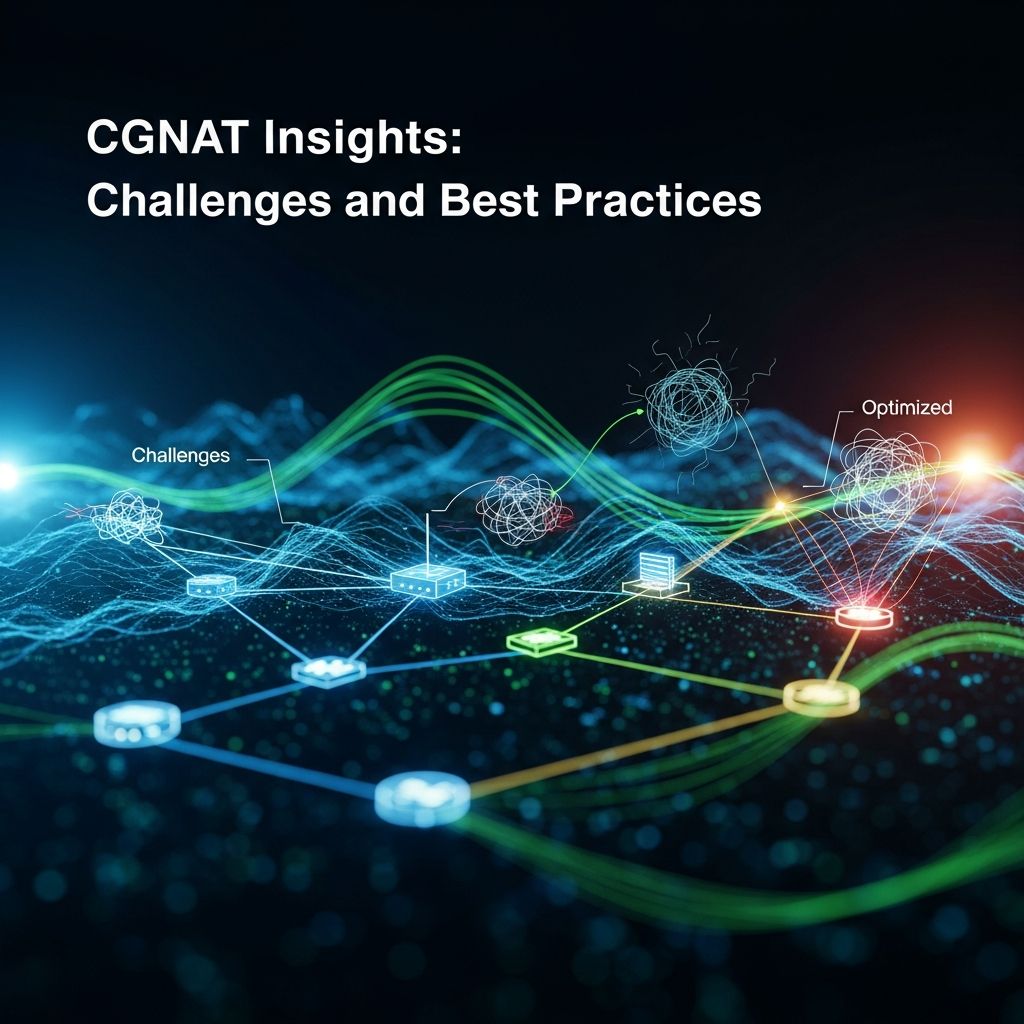
Carrier Grade Network Address Translation (CGNAT) has become a cornerstone for many Internet Service Providers (ISPs) grappling with the ongoing scarcity of IPv4 addresses. As the world hurtles toward an all-IP future, CGNAT serves as a stopgap measure, allowing multiple users to share a single public IPv4 address. However, this technology introduces complexities that affect everything from everyday browsing to advanced peer-to-peer applications. This comprehensive guide delves into the mechanics of CGNAT, uncovers its pitfalls, evaluates real-world performance, and outlines forward-thinking strategies to mitigate risks while paving the way for IPv6.
Understanding the Rise of CGNAT in Modern Networks
The IPv4 address pool, designed decades ago, has long been depleted. Regional Internet Registries (RIRs) like RIPE NCC and ARIN have exhausted their allocations, forcing ISPs to innovate. CGNAT, also known as Large Scale NAT (LSN), operates at the provider edge, translating thousands of private IPv4 addresses into a limited pool of public ones. Unlike traditional home routers’ NAT, CGNAT handles massive scale—often 128 to 256 users per public IP—with sophisticated port management.
ISPs deploy CGNAT to extend IPv4’s lifespan without immediate full-scale IPv6 overhauls. It’s particularly prevalent in mobile networks and regions with high subscriber density. Yet, this shared addressing model fundamentally alters how devices communicate, introducing layers of translation that weren’t anticipated in original IP designs.
- Key Deployment Models: Stateful CGNAT tracks sessions via tuples of source IP, port, destination IP, and port.
- Port Allocation: Typically 512-1024 ports per subscriber to avoid exhaustion.
- Hardware Demands: Requires robust, carrier-grade equipment capable of millions of concurrent sessions.
Technical Mechanics and Performance Benchmarks
At its core, CGNAT performs symmetric or endpoint-independent mapping. Symmetric mapping reuses ports based on destination, conserving resources but complicating inbound connections. Performance testing reveals CGNAT can sustain high throughput—up to 100 Gbps per device in lab settings—but real-world variability arises from session density.
| Metric | IPv4 Direct | CGNAT | Impact |
|---|---|---|---|
| Concurrent Sessions | Unlimited per IP | 16M+ per cluster | High scalability |
| Latency Overhead | Baseline | +5-20ms | Noticeable in gaming |
| Port Exhaustion Risk | Low | Medium-High | Requires oversubscription control |
| Failover Time | N/A | Sub-second | Redundancy feasible |
Redundancy features, such as stateful session syncing across devices, enable sub-second failover even under heavy loads. Dynamic routing integration further bolsters reliability, ensuring traffic reroutes seamlessly during hardware failures.
Application Breakage: Where CGNAT Falls Short
While CGNAT excels in client-server models like web browsing, it disrupts protocols relying on direct peer-to-peer (P2P) exchanges. Applications must navigate multiple NAT layers, often failing without traversal aids like STUN or TURN.
- Voice over IP (VoIP): Services like SIP struggle with symmetric mappings, causing one-way audio or call drops. Testing shows 20-40% failure rates without ICE (Interactive Connectivity Establishment).
- Online Gaming: UDP-heavy games experience lag spikes and connection timeouts due to port predictability issues.
- Streaming Media: Platforms such as audio services face buffering from server-initiated connections.
- File Sharing: P2P torrents see drastically reduced speeds, sometimes by 90%, as inbound connections are blocked.
Emerging web tech like WebSockets and HTTP/2 exacerbates these issues, demanding more persistent, bidirectional flows that CGNAT wasn’t optimized for.
Security Implications and Privacy Concerns
CGNAT’s shared IP model amplifies risks. Users behind the same public IP inherit each other’s reputations, leading to collateral blocking by anti-abuse systems. For instance, if one user engages in spam, firewalls may blacklist the entire pool, affecting innocents.
- Traceback Challenges: Law enforcement struggles to identify individuals amid port multiplexing.
- Attack Amplification: DDoS sources appear concentrated, masking true scale.
- Port Scanning Vulnerability: Exposed port ranges invite reconnaissance.
Moreover, CGNAT hinders end-to-end encryption verification and complicates VPN tunneling, as nested NATs create hairpinning inefficiencies.
Operational Realities for ISPs
Managing CGNAT demands vigilant monitoring. Oversubscription ratios must balance utilization against breakage thresholds—typically 32:1 to 128:1. Logging requirements for compliance add storage burdens, with each session generating audit trails.
Troubleshooting escalates: customer complaints often stem from port quotas, requiring per-subscriber analytics. Costs include not just hardware but ongoing optimization to minimize churn from poor experiences.
Strategic Alternatives and Hybrid Approaches
CGNAT isn’t a panacea. Complementary tech like Dual-Stack Lite (DS-Lite) tunnels IPv4 over IPv6, reducing CGNAT dependency. NAT64/DNS64 enables IPv6-only clients to reach IPv4 sites seamlessly.
- IPv6 Prioritization: Native dual-stack remains ideal, freeing public IPv4 for legacy needs.
- MAP-E/T: Mapping of Address and Port variants embed subscriber IDs in IPv6 prefixes.
- 464XLAT: Translates IPv4 to IPv6 for mobile environments.
ISPs should phase CGNAT as IPv6 adoption grows, targeting <10% reliance within 3-5 years.
Future-Proofing: Recommendations for Network Operators
- Accelerate IPv6: Aim for 50%+ traffic share; educate users on benefits like direct connectivity.
- Selective CGNAT: Apply only to IPv4-only subscribers; exempt IPv6-capable ones.
- Enhance Logging: Implement privacy-preserving, queryable systems for legal needs.
- Test Rigorously: Simulate high loads on VoIP, gaming before rollout.
- Monitor Metrics: Track breakage rates, port utilization, latency deltas.
- Collaborate: Share anonymized data with IETF for protocol improvements.
Ultimately, CGNAT buys time, but IPv6 unlocks the Internet’s full potential.
Frequently Asked Questions (FAQs)
What exactly is Carrier Grade NAT?
CGNAT is a service provider-level NAT that shares public IPv4 addresses among many users, using advanced port allocation to maintain session state.
Does CGNAT slow down my internet?
It can add minor latency (5-20ms) and disrupt P2P apps, but web traffic remains largely unaffected.
Is CGNAT secure?
It provides some isolation but introduces shared IP risks and traceback difficulties.
Will IPv6 replace CGNAT entirely?
Yes, as adoption grows, CGNAT becomes obsolete, restoring end-to-end connectivity.
How do I know if my ISP uses CGNAT?
Check if your public IP changes infrequently despite router reboots, or use tools like ipleak.net.
References
- RFC 6888: Common Requirements for Carrier-Grade NAT (CGN) — IETF. 2013-04-25. https://datatracker.ietf.org/doc/html/rfc6888
- Draft Nishizuka: CGN Deployment Considerations — IETF Datatracker. 2013-07-08. https://datatracker.ietf.org/doc/html/draft-nishizuka-cgn-deployment-considerations-01
- Survey and Experiments on Carrier-Grade NATs — arXiv (Peer-reviewed preprint). 2023-11-09. https://arxiv.org/pdf/2311.04658
- How NAT Traversal Works Concerning CGNATs — APNIC Blog (Regional Internet Registry). 2022-05-03. https://blog.apnic.net/2022/05/03/how-nat-traversal-works-concerning-cgnats/
- Detecting CGNAT to Reduce Collateral Damage — Cloudflare Blog (Technical Analysis). 2023-10-18. https://blog.cloudflare.com/detecting-cgn-to-reduce-collateral-damage/
Similar Articles







Read full bio of medha deb