Building an Inclusive Internet for Women
Collaborative efforts to empower women online through skills, safety, and global leadership initiatives.

The digital world holds immense potential for empowerment, yet women and girls often face barriers that limit their full participation. From unequal access to targeted online threats, these challenges hinder progress toward a truly universal Internet. This article delves into multifaceted approaches to address these issues, drawing on global collaborations to promote equity, safety, and leadership among women in the digital realm.
Understanding the Gender Gap in Digital Spaces
Despite rapid technological advancements, a significant divide persists in how men and women engage with the Internet. Statistics reveal that in many regions, women are less likely to own smartphones or use high-speed connections. This gap exacerbates inequalities in education, employment, and social connectivity.
- In low-income countries, women are 20% less likely to use the Internet than men, according to recent UN data.
- Urban-rural disparities further compound this, with rural women facing infrastructure limitations.
- Cultural norms and economic dependencies often restrict women’s ability to acquire devices or data plans independently.
Addressing this requires targeted interventions that go beyond mere connectivity to encompass affordability, literacy, and relevance of content for women.
Empowering Women Through Digital Literacy Programs
Digital skills training stands as a cornerstone for inclusion. Initiatives worldwide are designing programs tailored to women’s needs, focusing on practical applications like e-commerce, online learning, and social networking.
Community-based workshops have proven effective, combining hands-on sessions with mentorship. For instance, programs in Africa and Asia teach not just basic navigation but also advanced topics like content creation and app development.
| Region | Key Skills Taught | Impact Metrics |
|---|---|---|
| Africa | Mobile banking, social media safety | 40% increase in participants’ online confidence |
| Asia | E-commerce setup, digital marketing | 25% rise in entrepreneurial ventures |
| Latin America | Online education tools, remote work | 30% improvement in job acquisition rates |
These efforts emphasize peer-to-peer learning, where women train other women, fostering sustainable knowledge transfer.
Enhancing Online Safety and Privacy for Female Users
Safety concerns deter many women from fully embracing the Internet. Harassment, cyberstalking, and data breaches disproportionately affect them, creating a climate of fear.
Global campaigns are raising awareness about privacy tools such as VPNs, two-factor authentication, and secure browsing habits. Educational modules highlight recognizing phishing attempts and managing personal data footprints.
- Virtual events simulate real-world threats, teaching response strategies.
- Policy advocacy pushes for stronger regulations against gender-based digital violence.
- Tech companies are encouraged to implement women-centric safety features, like easy block/report functions.
By prioritizing privacy by design, platforms can become safer havens, encouraging broader participation.
Fostering Leadership Among Women in Tech
Representation matters. Women leaders in Internet governance and technology drive policies that reflect diverse needs. Mentorship networks connect aspiring professionals with established figures, spanning from policy makers to engineers.
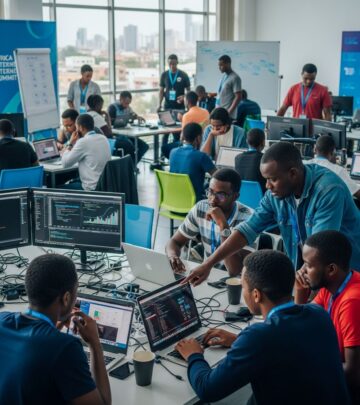
Annual summits and hackathons provide platforms for innovation, where teams develop solutions like affordable connectivity devices tailored for underserved communities.
“True inclusivity happens when women not only access the Internet but shape its future.” – Adapted from global tech equity advocates.
Global Partnerships Driving Change
No single entity can tackle these challenges alone. Coalitions involving nonprofits, governments, and private sectors amplify impact. Joint ventures fund infrastructure in remote areas and harmonize standards for digital rights.
Examples include cross-regional alliances that share best practices, from Latin American broadband expansions to European privacy frameworks adapted for developing nations.
Measuring Progress and Future Directions
Success metrics include usage rates, skill acquisition, and leadership appointments. Annual reports track reductions in the gender gap and increases in women’s digital contributions.
Looking ahead, emerging technologies like AI and 5G offer opportunities but also risks. Proactive strategies must integrate ethical AI training to prevent biases against women.
Frequently Asked Questions
What are the main barriers for women online?
Affordability, safety fears, and lack of relevant skills top the list, varying by region.
How can communities contribute?
Host local workshops, advocate for policies, and support women-led tech projects.
Are there success stories?
Yes, from rural entrepreneurs launching online businesses to women leading national broadband initiatives.
What role does policy play?
Strong laws on data protection and anti-harassment are crucial for trust-building.
How to get involved?
Join global networks, volunteer for training, or donate to equity-focused funds.
References
- Measuring Digital Development: Gender Divide Report — International Telecommunication Union (ITU). 2023-12-15. https://www.itu.int/en/ITU-D/Statistics/Pages/stat/default.aspx
- Women’s Digital Inclusion: Global Trends — United Nations Women. 2024-03-08. https://www.unwomen.org/en/digital-library/publications/2024/03/womens-digital-inclusion
- Alliance for Affordable Internet 2023 Annual Report — World Wide Web Foundation. 2023-11-20. https://a4ai.org/news/a4ai-2023-annual-report/
- Gender and Cybersecurity: ITU Guidelines — International Telecommunication Union (ITU). 2024-05-10. https://www.itu.int/pub/D-STR-GENDER.CYBER
- World Economic Forum Global Gender Gap Report 2024 — World Economic Forum. 2024-06-12. https://www.weforum.org/publications/global-gender-gap-report-2024/
Similar Articles






Read full bio of medha deb