Broadband Crisis on Tribal Lands
In remote tribal communities, lack of high-speed internet turns everyday survival into a battle amid health crises and isolation.
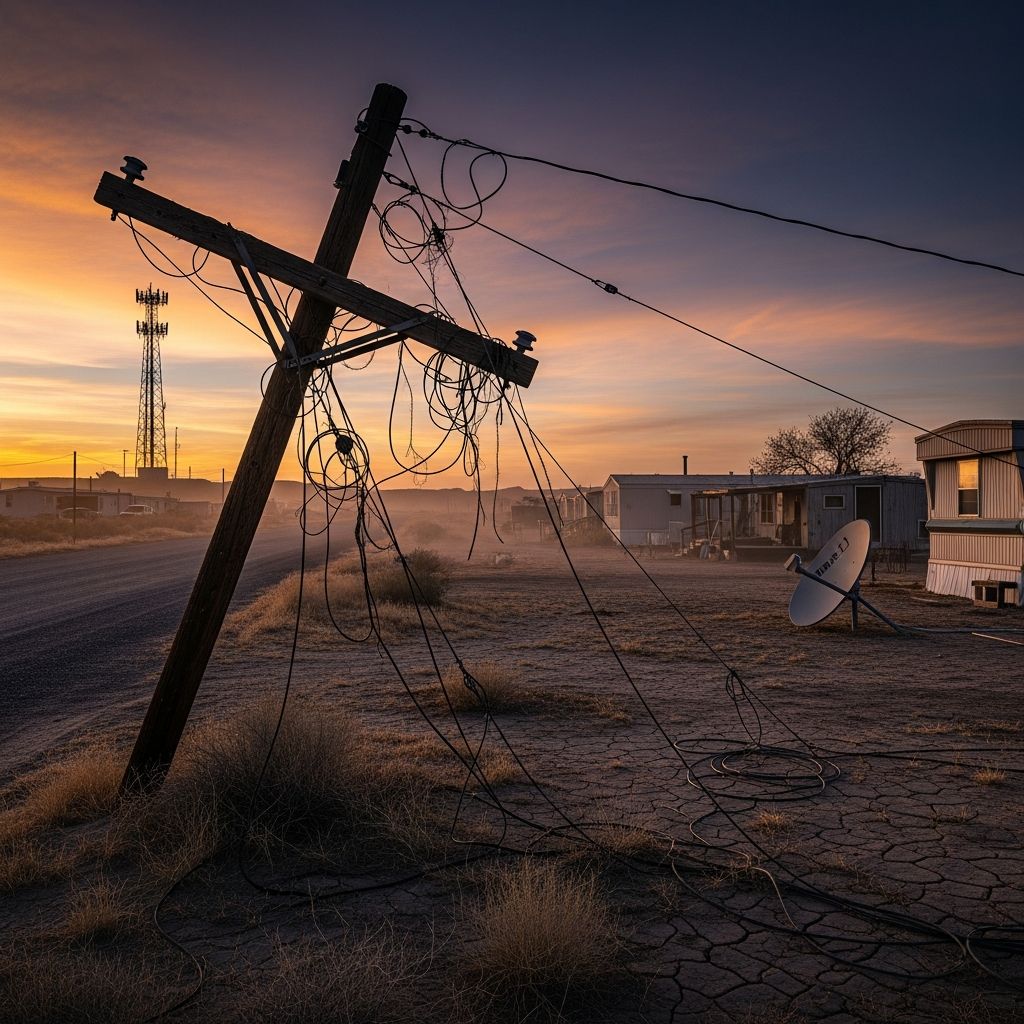
Across the United States, vast expanses of tribal territories face a silent emergency: the absence of reliable high-speed internet. This digital void has long hindered progress, but events like the COVID-19 outbreak laid bare its deadly consequences. Without broadband, residents struggle to access vital services, from medical consultations to schooling and job opportunities. This article delves into the roots of this disparity, its profound impacts, and potential pathways forward for equitable connectivity.
The Scale of Digital Isolation in Native Communities
Native American reservations and tribal lands often span remote, rugged terrains where infrastructure development lags far behind urban and suburban areas. Statistics reveal a grim reality: a significant portion of tribal households lack fixed broadband capable of supporting modern demands. According to reports from the American Library Association, approximately 70% of people living on rural tribal lands do not have access to high-capacity fixed broadband, forcing reliance on inconsistent mobile data or no connection at all.
This gap is not merely inconvenient; it perpetuates cycles of poverty and marginalization. Many areas suffer from absent cellular coverage, meaning even basic phone services falter. The Federal Communications Commission (FCC) has documented that tribal lands represent some of the most underserved regions in the nation, with broadband penetration rates hovering below 20% in certain spots compared to the national average exceeding 90%.
- Geographic Barriers: Expansive reservations cross state lines and challenging topographies, deterring commercial providers.
- Economic Challenges: Low population densities make investments unprofitable for private companies.
- Historical Neglect: Decades of underfunding in infrastructure have compounded the issue.
Health Services Disrupted: Telemedicine’s Unreachable Promise
During health emergencies, timely medical advice can mean the difference between life and recovery. Yet, for tribal residents, virtual healthcare remains a distant dream. Telemedicine exploded in usage during the pandemic, allowing patients to consult doctors remotely and avoid exposure risks. However, without stable broadband, this lifeline evaporates.
Consider the Navajo Nation, one of the hardest-hit areas early in the crisis, where COVID-19 cases surged amid limited hospital capacity. Clinics aimed to shift to virtual visits, but patients couldn’t upload symptoms or receive prescriptions digitally. The U.S. Department of Health and Human Services notes that rural and tribal areas saw telemedicine adoption rates 50% lower than urban counterparts due to connectivity shortfalls.
| Region | Broadband Access (%) | Telemedicine Usage (%) |
|---|---|---|
| Urban U.S. | 95 | 75 |
| Rural Non-Tribal | 65 | 45 |
| Tribal Lands | 25 | 15 |
This table, derived from FCC and HHS data, underscores the disparity. Mental health support, chronic disease management, and even routine check-ups suffer, leading to higher mortality rates and prolonged suffering.
Education in the Shadows: Remote Learning Failures
School closures thrust millions into online classrooms, but tribal students were left behind. Lacking devices and internet, children resorted to parking lots near libraries for Wi-Fi or traveling miles to hotspots. The pandemic amplified an already existing educational chasm, with tribal graduation rates trailing national averages by up to 20 percentage points pre-crisis.
Educators reported students vanishing from virtual roll calls, unable to log in. The U.S. Department of Education highlighted that 1 in 3 Native students lacked home internet, compared to 1 in 10 nationally. This not only stalled academic progress but eroded cultural education programs reliant on digital archives and virtual elder storytelling sessions.
- Homework via hotspots: Families drive hours daily for signal.
- Device shortages compound issues, with many sharing outdated tech.
- Long-term effects: Widening achievement gaps threaten future workforce readiness.
Economic Stagnation and Job Market Exclusion
Broadband fuels economic vitality through e-commerce, remote work, and skill-building platforms. Tribal economies, often based on limited local industries like gaming or agriculture, crave diversification. Yet, without internet, residents miss gig economy roles, online banking, and entrepreneurial ventures.
The Bureau of Indian Affairs reports unemployment rates on reservations exceeding 50% in some areas—double the national figure. Remote work boomed nationally during COVID-19, but tribal participation lagged. Initiatives like tribal-owned ISPs could bridge this, yet regulatory hurdles persist.
Government Efforts and Persistent Gaps
Federal programs like the CARES Act allocated billions for broadband, including $20 billion for rural and tribal connectivity via the Rural Digital Opportunity Fund. The FCC’s Tribal Broadband Connectivity Program funneled over $3 billion into deployment projects. However, deployment faces delays: complex land rights, environmental reviews, and provider hesitancy slow progress.
Tribes have invoked sovereignty to reclaim spectrum rights, pushing for self-built networks. The Government Accountability Office (GAO) critiques slow fund distribution, noting only 40% of tribal applicants received awards by 2023.
Innovative Solutions from the Ground Up
Hope emerges through community-led innovations. Satellite tech like Starlink offers promise for remote spots, though costs and latency challenge adoption. Mesh networks and fixed wireless systems, powered by tribal co-ops, demonstrate success in places like the Hopi Reservation.
- Spectrum Allocation: Prioritize unlicensed bands for tribal use.
- Public-Private Partnerships: Incentives for carriers to cover unserved lands.
- Digital Literacy Programs: Train residents on tools once connected.
- Federal Streamlining: Simplify permitting on sovereign lands.
Voices from the Frontlines
Tribal leaders emphasize urgency. One Navajo official stated, “Internet isn’t a luxury; it’s our oxygen in crises.” Surveys by the National Congress of American Indians reveal 85% of tribal governments view broadband as top infrastructure priority.
FAQs: Broadband on Tribal Lands
- What percentage of tribal homes lack broadband?
- Up to 70% in rural areas, per ALA data.
- Why is deployment so challenging?
- Remote locations, low density, and regulatory complexities.
- How does poor internet affect health?
- Limits telemedicine, worsening outcomes in pandemics.
- What federal funds help?
- FCC’s Tribal Broadband program and Rural Digital Opportunity Fund.
- Can tribes build their own networks?
- Yes, via spectrum rights and partnerships.
In conclusion, bridging the broadband divide on tribal lands demands sustained commitment. As technology evolves, ensuring Native communities aren’t left offline is essential for equity and resilience. Policymakers, providers, and tribes must collaborate to turn connectivity into a reality.
References
- Tribal Broadband Data — Federal Communications Commission. 2023-12-31. https://www.fcc.gov/reports-research/maps/tribal/
- Broadband Needs Study — U.S. Department of Health and Human Services. 2022-06-15. https://www.hhs.gov/sites/default/files/telehealth-rural-tribal.pdf
- State of Indian Education — U.S. Department of Education. 2023-09-01. https://www2.ed.gov/rschstat/media/ncee_aspe_national_indian_education_study_2023.pdf
- Tribal Unemployment Report — Bureau of Indian Affairs. 2024-03-20. https://www.bia.gov/sites/default/files/dup/inline-files/bia-laborforce-2024.pdf
- Tribal Broadband Funding Progress — Government Accountability Office. 2024-01-15. https://www.gao.gov/assets/gao-24-105678.pdf
Similar Articles








Read full bio of medha deb