Bridging Africa’s Digital Gender Gap
Empowering African women through equitable internet access, safety, and skills to drive inclusive growth and equality.
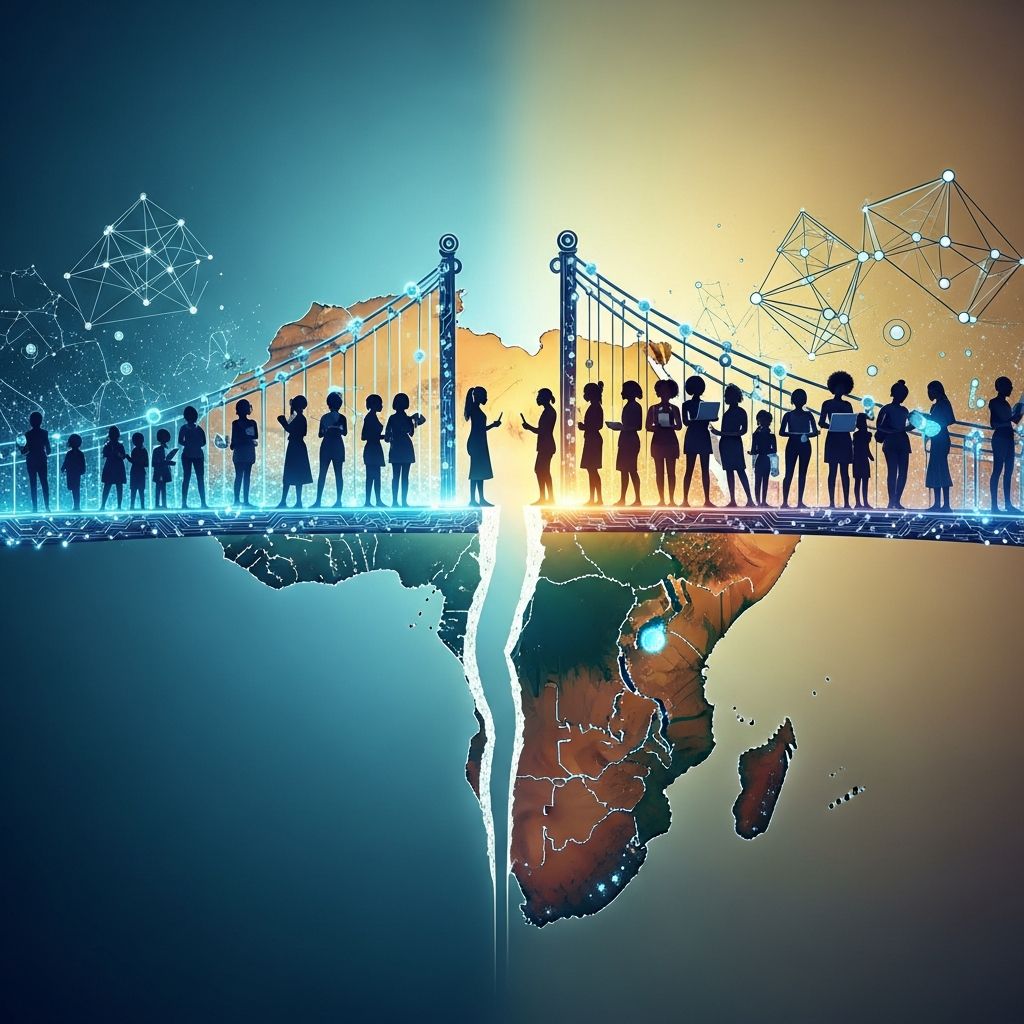
In an era where digital connectivity shapes economies, education, and social interactions, African women remain disproportionately excluded from the internet’s benefits. With only about 31% of women in Africa online compared to 43% of men as of recent data, the continent faces a stark digital gender divide that hinders progress toward sustainable development goals. This gap not only limits individual opportunities but also perpetuates broader inequalities, affecting families, communities, and nations. Closing this divide requires multifaceted strategies focusing on affordability, infrastructure, skills training, and safety.
The Scale of Digital Exclusion for Women
The digital gender gap in Africa is among the widest globally. According to the International Telecommunication Union (ITU), while 40% of Africans used the internet in 2022, women lag significantly behind, comprising a growing share of the offline population. In Sub-Saharan Africa, women are 32% less likely to access the internet than men, driven by factors like literacy rates, affordability, and location.
Rural women face even steeper challenges. In places like Madagascar’s rural areas, merely 2.6% of women have internet access, exacerbating their exclusion from essential services such as healthcare information, market opportunities, and family communication. Globally, of the 46 least developed countries (LDCs) identified by the UN, 33 are African, amplifying these disparities.
- Access Statistics: 21% of African women have internet access versus higher male rates.
- Device Ownership: Women own fewer smartphones, with costs equating to 39% of average monthly income in Africa.
- Regional Variance: Three men online for every two women, widest in South Asia and Sub-Saharan Africa.
These numbers underscore a vicious cycle: limited access restricts economic participation, education, and empowerment, further widening the gap.
Barriers Impeding Women’s Online Participation
Several interconnected obstacles prevent African women from fully engaging with digital spaces. Affordability tops the list, as entry-level smartphones remain luxuries for many low-income households. Beyond cost, inadequate infrastructure in rural areas means unreliable or nonexistent connectivity.
Digital literacy is another critical hurdle. Many women lack the skills to navigate online platforms, compounded by lower education levels in some regions. Cultural norms and household dynamics also play a role; studies on 3G rollout in Sub-Saharan Africa reveal that while internet access boosts women’s self-employment, it can sometimes reduce household decision-making power due to backlash against shifting gender norms.
| Barrier | Impact on Women | Example Regions |
|---|---|---|
| Affordability | Limits device ownership | Sub-Saharan Africa |
| Infrastructure | No reliable internet | Rural Madagascar, Ghana |
| Skills Gap | Unable to use tech effectively | Eastern/Southern Africa |
| Safety Concerns | Harassment drives users offline | Continent-wide |
Safety issues are particularly acute. Technology-facilitated gender-based violence (TFGBV), including harassment, doxxing, and disinformation, disproportionately affects women, journalists, and activists. The African Commission on Human and Peoples’ Rights (ACHPR) Resolution 522 (2022) highlights the need for states to combat these threats.
Empowerment Through Digital Access
Internet access transforms lives. For African women, it opens doors to e-commerce, remote learning, telehealth, and social networks. Initiatives in Ghana, Malawi, and Mexico demonstrate how connectivity paired with digital literacy training enables women to leverage technology for community impact and economic gains.
Research shows 3G expansion increases women’s labor participation, particularly in self-employment and agriculture, fostering financial independence. However, true empowerment demands addressing intra-household dynamics to prevent backlash, such as reduced autonomy in decisions on healthcare or family visits.
Connectivity is more than being online—it’s quality access and skills to unlock opportunities.
Strategies for Inclusive Digital Growth
To bridge the gap, stakeholders must adopt targeted approaches. Governments should prioritize affordable broadband expansion and subsidies for women’s digital devices. Digital literacy programs tailored to women’s needs—focusing on rural contexts, safety, and practical applications—are essential.
The REACT framework offers a blueprint: Rights-based policies, Education for skills, Access to infrastructure, Content that’s relevant and empowering, and Targets for measurable equity.
- Invest in rural infrastructure for universal coverage.
- Launch women-focused training via partnerships like those with USAID and Microsoft.
- Enforce policies against TFGBV, inspired by ACHPR resolutions.
- Involve women in ICT policy design for inclusive outcomes.
Involving women in decision-making ensures solutions reflect their realities, from app development to safety protocols.
Safeguarding Women in Digital Spaces
Online safety is non-negotiable. Projects like CIPESA’s #BeSafeByDesign advocate for platforms to prioritize protections against TFGBV, AI-driven harms, and surveillance. Women human rights defenders (WHRDs) face heightened risks, necessitating upskilling in digital security.
Governments and tech firms must collaborate on regulations that promote safe spaces without stifling innovation. Education on safe online practices empowers users to report abuses and protect privacy.
Success Stories and Future Outlook
Progress is evident. In Madagascar, TSF’s projects equip rural women with digital tools, enhancing communication and information access. Pan-African efforts emphasize women’s role in policy, yielding more equitable outcomes.
Looking ahead, achieving gender parity in internet use by 2030 aligns with UN Sustainable Development Goals. With 50% of Africa’s population being women, their digital inclusion is pivotal for continental prosperity.
Frequently Asked Questions (FAQs)
What is the digital gender gap in Africa?
It’s the disparity in internet and device access between men and women, with women at 31% usage versus 43% for men.
Why do African women have less internet access?
Key reasons include high costs, poor infrastructure, low digital skills, and safety fears.
How does internet access empower women?
It boosts economic opportunities, education, healthcare, and decision-making power.
What role do governments play?
They must expand infrastructure, enforce safety laws, and set gender-equity targets.
Are there successful initiatives?
Yes, partnerships in Ghana and Malawi provide training and connectivity to rural women.
References
- Measuring Digital Development: Facts and Figures 2023 — International Telecommunication Union (ITU). 2023-07-05. https://www.itu.int/en/ITU-D/Statistics/Pages/facts/default.aspx
- African women cannot wait: Why gender equality must be at the center of digital inclusion — Global Digital Inclusion Partnership. 2023-05-09. https://globaldigitalinclusion.org/2023/05/09/african-women-cannot-wait-why-gender-equality-must-be-at-the-center-of-digital-inclusion/
- #BeSafeByDesign: A Call To Platforms To Ensure Women’s Online Safety — CIPESA. 2025-12-XX. https://cipesa.org/2025/12/besafebydesign-a-call-to-platforms-to-ensure-womens-online-safety/
- 3G Internet and Women’s Empowerment in Sub-Saharan Africa — American Economic Association (AEA) Conference Paper. 2026. https://www.aeaweb.org/conference/2026/program/paper/k3E5Bky5
- Resolution 522: Need for African States to Address Online Violence Against Women and Girls — African Commission on Human and Peoples’ Rights (ACHPR). 2022. https://achpr.au.int/en/adopted-resolutions/522-need-african-states-address-online-violence-against-women-and-girls
Similar Articles







Read full bio of medha deb