Brazil’s Pioneering Fiber Network in Espírito Santinho
Discover how a rural Brazilian community built the nation's first fiber optic network, bridging the digital divide through collaboration and innovation.
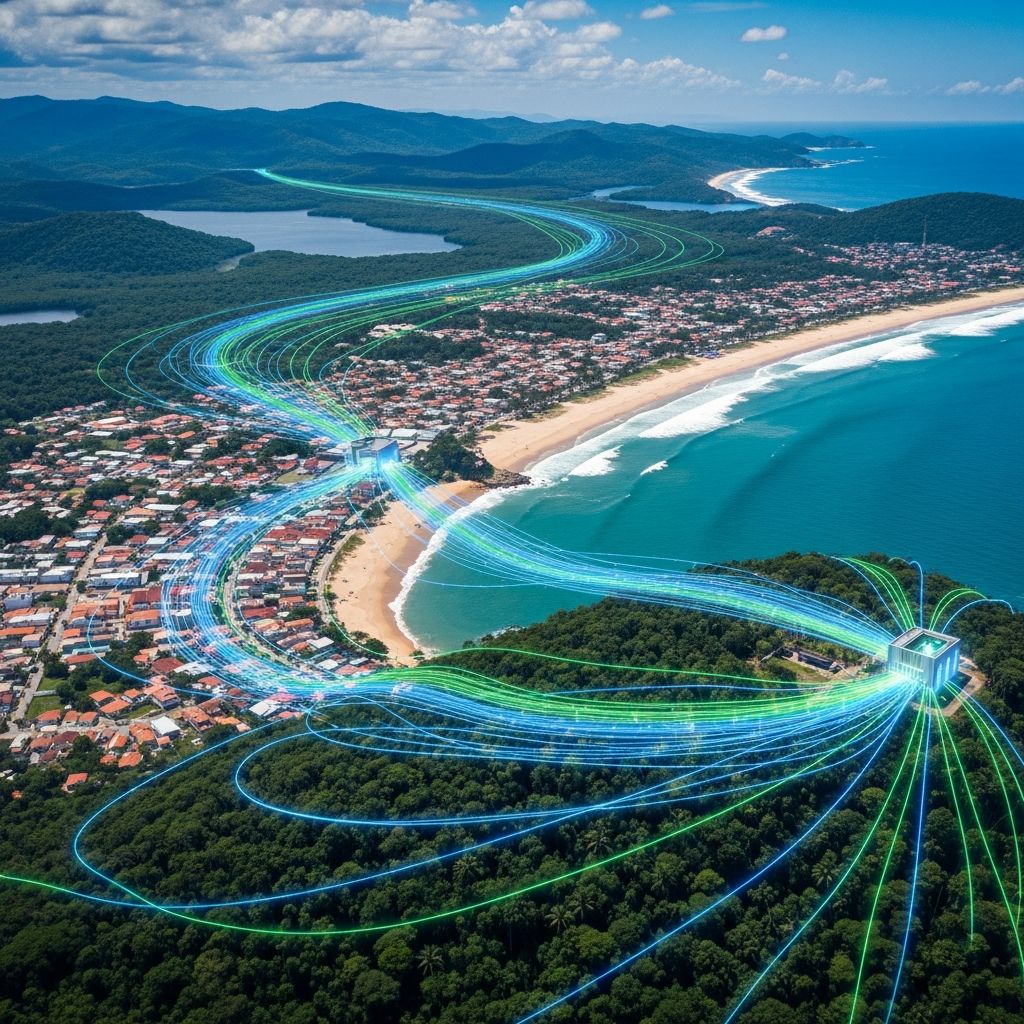
In the rolling hills of Rio de Janeiro state, a small rural enclave known as Espírito Santinho has etched its name in digital history. Once isolated from the fast-paced world of high-speed internet, this community has become a beacon of innovation by establishing the country’s very first fiber optic community network. This achievement not only transformed daily life for residents but also offers a blueprint for tackling Brazil’s persistent rural connectivity challenges, where millions still lack reliable access.
The Digital Void in Rural Brazil
Brazil’s urban centers buzz with gigabit speeds and seamless streaming, but rural areas tell a different story. According to recent surveys from Brazil’s Center for Information and Communication Technologies (Cetic.br), a significant portion of rural households—over 25%—remain unconnected to the internet. This gap exacerbates inequalities in education, healthcare, and economic opportunities. In places like Espírito Santinho, pre-2019 life meant spotty mobile signals and no broadband, forcing residents to travel for basic online tasks.
Factors like rugged terrain, high deployment costs, and limited commercial interest from big providers compound the issue. Traditional wireless solutions often fall short, delivering inconsistent performance that hampers video calls, online learning, and e-commerce. Espírito Santinho’s story begins here, with locals determined to rewrite their connectivity narrative.
Sparking Change: Grassroots Mobilization
The turnaround started with community leaders recognizing internet as a necessity, not a luxury. At the forefront was the residents’ association, which rallied neighbors around a shared vision. They identified key pain points: unreliable signals disrupting remote work and studies, especially post-pandemic.
- Community meetings fostered buy-in, with families pledging small monthly fees for sustainable operations.
- Local knowledge guided antenna placements on hills for optimal coverage.
- Training sessions empowered residents to handle basic maintenance, building long-term self-reliance.
This bottom-up approach mirrored global community network successes, emphasizing ownership to ensure longevity.
Phase One: Launching Wireless Connectivity
The initial push focused on wireless technology as a quick win. Partnerships formed swiftly with educational institutions and nonprofit chapters dedicated to digital inclusion. Equipment like routers and antennas arrived, enabling radio-based links that spanned the community’s expanse.
Installation was a collective effort—residents strung cables and tested signals, achieving basic coverage within months. Speeds improved dramatically, allowing email, social media, and video streaming. Yet, limitations emerged: weather interference and capacity constraints during peak hours signaled the need for an upgrade.
| Connectivity Phase | Technology | Key Benefits | Challenges |
|---|---|---|---|
| Wireless Start | Radio spectrum via antennas | Quick deployment, affordable entry | Signal instability, limited bandwidth |
| Fiber Upgrade | Optic cables | High speeds, reliability | Higher costs, infrastructure needs |
Strategic Alliances Fuel Progress
Scaling required external muscle. The community linked with a federal educational institute providing hardware expertise and a national nonprofit offering mobilization know-how. These allies supplied not just gear but training, ensuring locals could sustain the network.
A pivotal moment came when seeking funding for fiber. Global connectivity advocates stepped in, recognizing the project’s potential as a model. This coalition blended technical prowess, funding, and on-ground insights, proving collaboration’s power in underserved regions.
Upgrading to Fiber: A Game-Changer
Transitioning to fiber demanded vision. The chosen architecture resembled ‘neutral networks,’ where infrastructure is shared among providers, slashing costs. A regional internet service provider handled the ‘last mile’—those final fiber connections to homes—while the community association oversaw management and upkeep.
Installation involved trenching cables across fields and roads, a labor-intensive process met with enthusiasm. Fiber’s advantages shone immediately: symmetrical gigabit speeds, low latency, and resilience to environmental factors. Residents now host webinars, stream 4K content, and run online businesses without hiccups.
This shared model cuts provider expenses while delivering affordable, high-quality service to users, setting a precedent for scalability.
Real Lives, Real Impacts
Jorge, a local farmer, exemplifies the shift. Previously trekking to town for banking, he now manages finances online, tracks crop prices, and educates his kids via virtual classes. Healthcare access improved too—telemedicine consultations save trips to distant clinics.
- Education: Students access global resources, boosting graduation rates.
- Economy: E-commerce enables artisans to sell crafts nationwide.
- Social: Video links strengthen family ties with urban relatives.
Broader metrics from Cetic.br highlight similar networks’ role in narrowing divides, with connected rural areas seeing 30% higher digital literacy.
Overcoming Hurdles on the Path
No journey is smooth. Regulatory navigation for spectrum use and fiber rights-of-way tested resolve. Funding gaps were bridged via grants, but initial skepticism from some residents required persistent outreach.
Technical glitches, like cable damage from weather, were fixed through community-led repairs. These trials honed skills, making the network robust. Lessons learned: Start small, prioritize training, and cultivate partnerships early.
A Replicable Blueprint for Brazil
Espírito Santinho’s success ripples outward. Brazil’s government and NGOs eye this ‘neutral network’ hybrid—community management plus commercial last-mile—as ideal for vast rural expanses. With 5G and satellite options emerging, fiber hybrids offer grounded reliability.
Policy tweaks, like streamlined permits and subsidies, could accelerate replication. Already, inspired groups in neighboring states explore similar setups, potentially connecting thousands more.
Future Horizons: Sustainability and Expansion
Sustainability hinges on revenue from user fees covering maintenance, with surpluses funding upgrades. Digital literacy programs ensure adoption, while monitoring tools track performance.
Expansion plans include adjacent villages, leveraging existing fiber backhaul. Integration with national broadband initiatives promises even greater speeds.
FAQs: Community Fiber Networks Explained
What makes fiber better than wireless for rural areas?
Fiber delivers ultra-high speeds and stability, unaffected by distance or weather, ideal for bandwidth-heavy uses like remote work.
How much does it cost residents?
Affordable monthly fees, often lower than urban plans, thanks to shared infrastructure efficiencies.
Can other communities copy this?
Absolutely—the model’s flexibility suits various scales, with resources from nonprofits aiding startups.
What role do partnerships play?
They provide expertise, equipment, and funding, combining community passion with professional execution.
Is government support involved?
Indirectly through policies; direct aid amplifies grassroots efforts.
Conclusion: Empowering Tomorrow’s Connected Rural Brazil
Espírito Santinho proves rural communities can lead digital revolutions. By fusing local drive with strategic alliances, they’ve not only gained world-class internet but inspired a movement. As Brazil pushes for universal connectivity, such stories light the way, promising a more inclusive digital future for all.
References
- Community Networks and the Internet in Brazil: Sectoral Studies — Cetic.br. 2022-11-29. https://cetic.br/media/docs/publicacoes/7/20221129163841/sectoral_studies_community_networks_and_the_internet_in_brazil.pdf
- Brazil’s Espírito Santo Investing in Fiber Expansion — BNamericas. 2023. https://www.bnamericas.com/en/news/brazils-espirito-santo-investing-in-fiber-expansion
- Community Networks Success Stories — Internet Society. 2023. https://www.internetsociety.org/issues/community-networks/success-stories/
- Brazil’s Broadband Boom: Lessons for the Global South — ComputerWeekly. 2024. https://www.computerweekly.com/opinion/Brazils-broadband-boom-lessons-for-the-Global-South
- How Small Connectivity Providers Can Help Close Brazil’s Digital Divides — Connect Humanity. 2024. https://connecthumanity.fund/how-small-connectivity-providers-can-help-close-brazils-digital-divides/
Similar Articles





Read full bio of Sneha Tete