Brazil Tops MANRS: NIC.br’s Routing Security Triumph
Discover how NIC.br and Brazil dominate MANRS adoption, fortifying global Internet routing against threats through strategic partnerships.
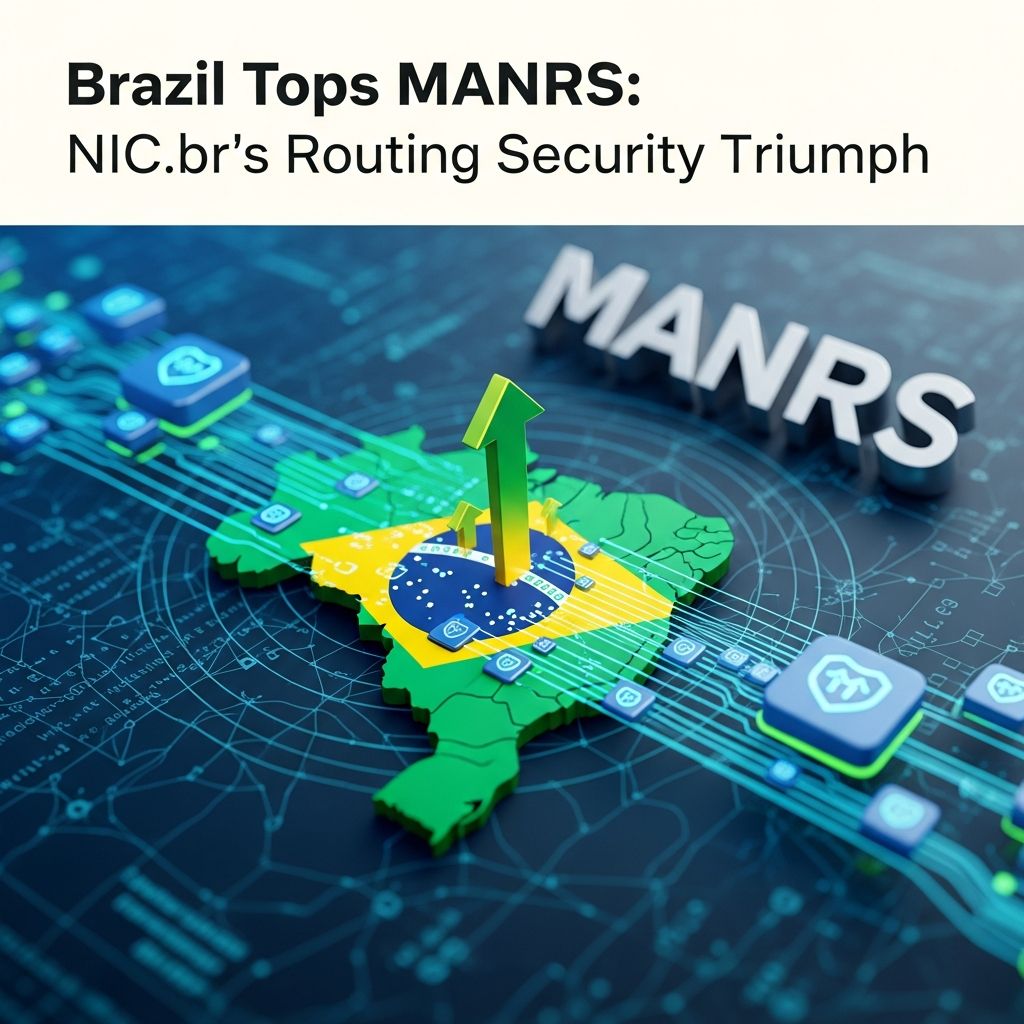
The Internet’s backbone relies on robust routing protocols to direct data traffic efficiently across the globe. Yet, vulnerabilities in these systems pose significant risks, from hijacking traffic to disrupting services. Enter MANRS, or Mutually Agreed Norms for Routing Security, a vital initiative spearheaded by the Internet Society to safeguard Border Gateway Protocol (BGP) operations. Brazil, through the efforts of NIC.br, has emerged as a frontrunner, boasting the highest number of MANRS participants worldwide. This achievement underscores the power of regional collaboration in building a more secure digital infrastructure.
Understanding MANRS and Its Critical Role
MANRS represents a set of voluntary guidelines designed for network operators, Internet Exchange Points (IXPs), and content delivery networks (CDNs). These norms aim to prevent common routing issues like prefix hijacking, where malicious actors falsely claim ownership of IP address blocks, or route leaks that flood networks with erroneous data. By committing to actions such as filtering invalid routes, validating path attributes, and maintaining secure coordination channels, participants contribute to a collective defense mechanism.
Launched in 2014, MANRS has grown steadily, now encompassing hundreds of entities. Its framework is divided into actions tailored for different network types: for operators, it emphasizes global validation lists and anti-hijack measures; for IXPs, it focuses on peering policies and monitoring tools. This structured approach ensures broad applicability, fostering trust in Internet routing.
- Core Actions for Operators: Implement prefix filters, tag suspicious routes, and avoid leaks.
- IXP Responsibilities: Mandate MANRS compliance for members and provide visibility tools.
- CDN/Cloud Focus: Secure announcements and customer validations.
The initiative’s success hinges on community buy-in, with public badges signaling commitment and encouraging peers to join. Brazil’s dominance, with nearly a quarter of all participants, exemplifies how targeted outreach can amplify impact.
NIC.br: The Driving Force Behind Brazil’s Success
NIC.br, the Brazilian Network Information Center, manages the .br domain and supports critical Internet infrastructure. Beyond registry duties, it champions technical standards and security through initiatives like the Brazilian Internet Steering Committee (CGI.br). In 2019, NIC.br hosted Andrei Robachevsky from the Internet Society at a key event, spotlighting MANRS and igniting widespread interest.
This presentation marked a turning point. NIC.br integrated MANRS into its outreach, organizing workshops, webinars, and meetings at forums like LACNIC and the Brazil Internet Exchange (IX.br). Their efforts yielded tangible results: from a handful of adopters, Brazil surged to 96 MANRS participants by mid-2020, representing 26% of the global total of 365.
| Region | Participants | Percentage of Global Total |
|---|---|---|
| Brazil | 96 | 26% |
| Europe | ~120 | 33% |
| North America | ~80 | 22% |
| Asia-Pacific | ~50 | 14% |
This table highlights Brazil’s outsized contribution relative to its population, driven by NIC.br’s multifaceted strategy.
Strategic Partnerships Fueling MANRS Growth
Collaboration is at MANRS’s heart, and NIC.br excels here. Partnering with the Internet Society, they co-hosted the first MANRS Community Meeting in Brazil during LACNIC 25. This event drew operators from across Latin America, sharing best practices and implementation hurdles. Follow-up sessions at IX.br meetings embedded MANRS discussions into routine operator gatherings.
Additionally, NIC.br launched a dedicated webpage aggregating MANRS resources in Portuguese, lowering barriers for local adoption. They advocated for IX.br members to require MANRS badges for peering, creating incentives. These steps not only boosted numbers but also deepened compliance, with many Brazilian networks fully implementing all actions.
Global ripple effects are evident: increased peering at IX.br, fewer incidents traced to Brazilian prefixes, and inspiration for neighbors like Argentina and Mexico to ramp up efforts.
Overcoming Challenges in Routing Security Adoption
Despite successes, hurdles persist. Smaller operators often cite resource constraints, while legacy equipment resists modern filters. NIC.br addressed this via tailored training, offering scripts for automated validation using tools like IRRToolSet and RPM. They also promoted free resources from the MRO community, including global RPKI databases.
Measurement remains key. Tools like the MANRS Compliance Checker evaluate adherence, revealing that Brazilian participants score highly in filtering and global validation. Yet, coordination channels need strengthening, prompting NIC.br to foster bilateral agreements.
“Routing security demands vigilance from every corner of the Internet. Brazil’s model shows what’s possible with dedication.” – Inspired by Internet Society advocacy.
Broader Impacts on Global Internet Resilience
Brazil’s MANRS leadership enhances not just local but planetary security. With BGP handling quadrillions of routes daily, even marginal improvements curb disruptions. Recent studies affirm this: CAIDA’s analysis shows MANRS networks exhibit fewer leaks and hijacks. In Brazil, DDoS attacks tied to routing flaws have declined, benefiting e-commerce, banking, and public services.
Looking ahead, NIC.br eyes RPKI rollout, where cryptographic certificates validate route origins. Brazil’s pilot with ICANN positions it as a regional hub, potentially cascading to the entire continent.
Lessons for Emerging MANRS Regions
Other countries can emulate Brazil’s playbook: start with high-visibility events, leverage national coordinators, and integrate into existing forums. Incentives like peering preferences accelerate uptake. The Internet Society’s regional bureaus stand ready to support, mirroring the NIC.br model.
Incentives matter too. Public recognition via leaderboards and badges builds momentum, as seen in Europe’s mature ecosystem.
Future Horizons for MANRS and Routing Security
MANRS evolves with threats. Version 2.0 introduces stricter metrics and automated reporting. Brazil, with its dense IXP fabric, tests innovations like real-time leak detection. Global participation nears 500, but full coverage requires sustained push.
Stakeholders must prioritize: operators invest in training, regulators incentivize via policies, users demand secure providers. Brazil proves it’s achievable.
Frequently Asked Questions (FAQs)
What is MANRS?
MANRS is a set of norms to secure Internet routing, focusing on preventing BGP hijacks and leaks through collaborative actions.
Why does Brazil lead in MANRS?
NIC.br’s workshops, partnerships, and IX.br integration propelled 96 participants, 26% of the global total.
How can my network join MANRS?
Review actions on manrs.org, implement them, submit for review, and earn a badge upon approval.
What tools help with MANRS compliance?
Use RPKI validators, prefix filters via IRR, and tools like BGPmon for monitoring.
Is MANRS mandatory?
No, it’s voluntary, but adoption enhances reputation and peering opportunities.
References
- Mutually Agreed Norms for Routing Security (MANRS) — Internet Society. 2024-05-01. https://manrs.org/
- Mind Your MANRS: Measuring the MANRS Ecosystem — CAIDA/UCSD. 2022-10-25. https://www.caida.org/catalog/papers/2022_mind_your_manrs/mind_your_manrs.pdf
- MANRS Actions — MANRS Observatory. 2023-11-15. https://manrs.org/actions/
- Brazilian Internet Network Information Center (NIC.br) — NIC.br. 2026-01-10. https://nic.br/
- Internet Routing Security: BGP Prefix Hijacking Prevention — RIPE NCC. 2024-03-20. https://www.ripe.net/publications/docs/ripe-844
Word count: 1678
Similar Articles






Read full bio of Sneha Tete