Boosting Web Security: Let’s Encrypt and Encryption Advocacy
Discover how Let's Encrypt revolutionizes HTTPS access, backed by Internet Society's commitment to universal end-to-end encryption for a safer internet.
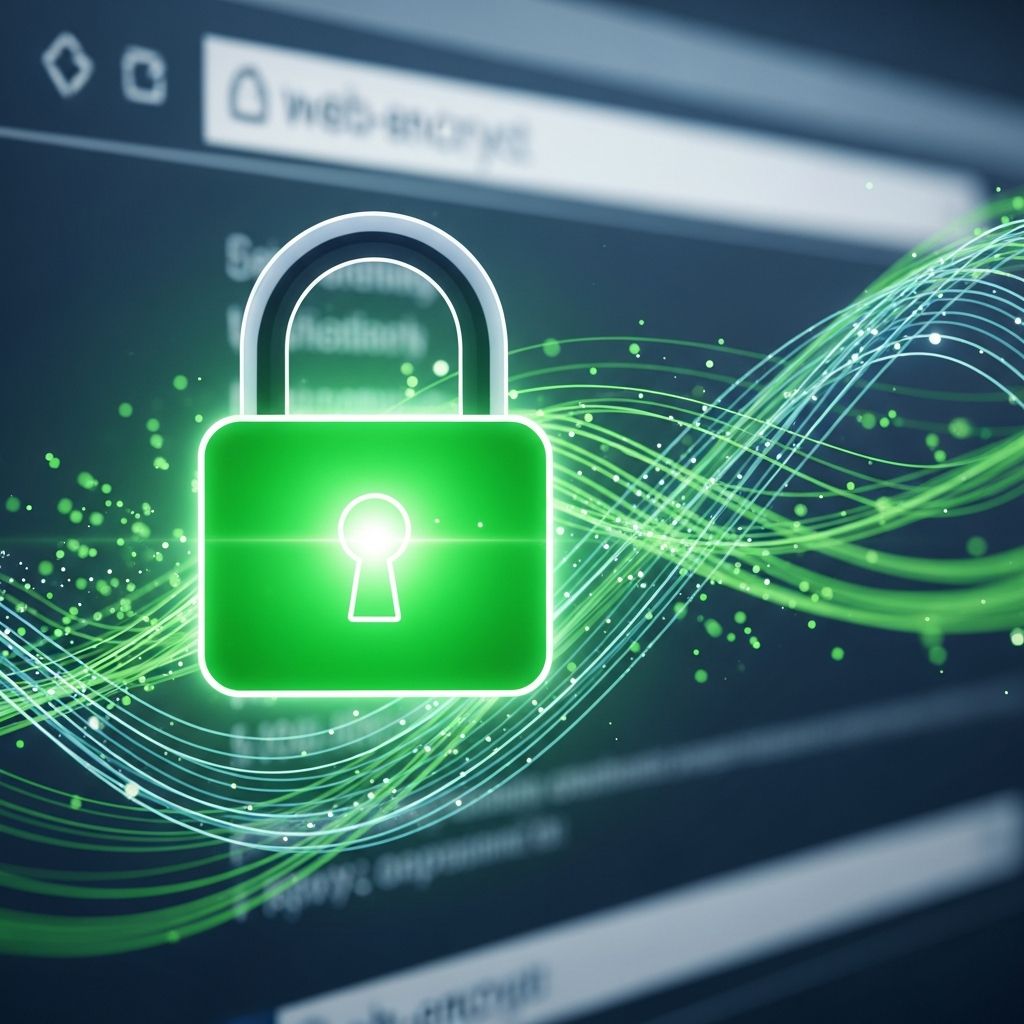
The digital landscape has evolved dramatically, with billions of users relying on the internet for everything from casual browsing to sensitive transactions. At the heart of this secure ecosystem lies encryption—a fundamental technology that shields data from prying eyes. Organizations like the Internet Society have long championed this cause, recognizing that widespread encryption is essential for building trust online. One standout initiative in this domain is Let’s Encrypt, a free certificate authority that has democratized access to secure connections. This article delves into the mechanics of Let’s Encrypt, its profound impact on web security, and the ongoing collaboration with advocates like the Internet Society to make encryption the default norm.
The Imperative for Universal Encryption
In an era where cyber threats are ubiquitous, encryption stands as the first line of defense. It ensures that data transmitted between users and servers remains confidential and intact. Without it, sensitive information—such as login credentials, financial details, and personal communications—could be intercepted by malicious actors. The Internet Society emphasizes that encryption isn’t a luxury; it’s a necessity for preserving privacy and fostering a reliable internet infrastructure.
Historically, implementing encryption via Transport Layer Security (TLS) certificates was hindered by high costs, complex procedures, and limited technical expertise. Small websites, blogs, and community platforms often operated without HTTPS, leaving users vulnerable. Let’s Encrypt disrupted this status quo by offering automated, no-cost certificates, drastically lowering barriers to entry. This shift has propelled HTTPS adoption from a minority practice to a web standard.
How Let’s Encrypt Transforms Certificate Management
Let’s Encrypt operates under the Internet Security Research Group (ISRG), a nonprofit dedicated to advancing internet security. Launched in 2015, it uses the ACME protocol to automate certificate issuance and renewal. Website owners can obtain and install TLS certificates in minutes, without manual intervention or fees.
- Automated Issuance: Clients like Certbot handle validation and deployment seamlessly.
- Free Access: No charges for domain validation (DV) certificates, covering over 90% of use cases.
- Short Validity Periods: 90-day certificates encourage frequent renewals, minimizing risks from compromised keys.
- Wildcard Support: Secure entire domains and subdomains with one certificate.
These features have scaled Let’s Encrypt to serve hundreds of millions of domains. By 2021, it protected over 260 million websites, and recent data shows it now secures more than 700 million, representing nearly half of the active web.
Internet Society’s Strategic Partnership
The Internet Society, a global nonprofit founded to promote open internet development, has been a cornerstone supporter of Let’s Encrypt since its inception. As a gold sponsor, it provides financial backing and advocacy to amplify the initiative’s reach. This partnership aligns with the Society’s broader mission to extend encryption everywhere, countering threats like surveillance and data breaches.
Through educational campaigns and policy engagement, the Internet Society educates stakeholders on encryption’s value. It collaborates with the Global Encryption Coalition to advocate against weakening standards, ensuring strong cryptography remains protected. This holistic approach combines technical innovation with grassroots and governmental outreach.
Quantifiable Impact on Web Encryption Rates
The proof of Let’s Encrypt’s efficacy lies in the numbers. Before its public beta in late 2015, only about 39% of web page loads used HTTPS. Within months, it issued its first million certificates, securing 2.5 million domains—90% previously unencrypted. Fast-forward to today: over 80% of page loads are encrypted, a testament to automated tools’ power.
| Milestone | Date | Achievement |
|---|---|---|
| Public Beta Launch | December 2015 | Free certificates available to all |
| 1 Million Certificates | March 2016 | 2.5M domains secured |
| 260M Websites | 2021 | Global encryption surge |
| 700M+ Websites | 2026 | 46% of web market share |
These metrics highlight not just growth but quality: previously insecure sites now enjoy robust protection, reducing man-in-the-middle attacks and enhancing user trust.
Technical Foundations: ACME and TLS Evolution
Central to Let’s Encrypt is the ACME (Automated Certificate Management Environment) protocol, standardized by the IETF. ACME enables domain owners to prove control via challenges like HTTP-01 or DNS-01, ensuring certificates go only to legitimate parties. TLS 1.3, the latest protocol, further bolsters security with faster handshakes and forward secrecy.
ISRG’s innovations, like Divvi Up for privacy-preserving metrics, allow measurement of adoption without compromising anonymity. This transparency builds community trust and guides future enhancements.
Overcoming Challenges in Global Adoption
Despite successes, hurdles persist. In developing regions, limited bandwidth and expertise slow uptake. Misconfigurations can lead to expired certificates, temporarily exposing sites. Let’s Encrypt counters this with community forums, detailed documentation, and tools like Certbot, which integrate with major web servers (Apache, Nginx).
Regulatory pressures also loom, with some governments proposing backdoors. The Internet Society actively lobbies for strong encryption policies, hosting workshops like the 2025 Africa Cybersecurity Advocacy event to empower local advocates.
Future Directions: Toward a Fully Encrypted Web
Let’s Encrypt’s vision is a 100% encrypted web. Ongoing projects include expanding certificate types, improving client software, and scaling infrastructure for IoT and emerging tech. Partnerships with browser makers ensure non-compliant sites face visibility penalties, nudging universal compliance.
The Internet Society plans to intensify global efforts, targeting e-voting, healthcare, and critical infrastructure. By 2030, encryption could underpin all internet traffic, from edge devices to cloud services.
Practical Steps for Website Owners
- Install Certbot: Download from certbot.eff.org for your OS and server.
- Run Initial Command:
certbot --nginxor equivalent for automated setup. - Enable Auto-Renewal: Use cron jobs to renew before expiry.
- Monitor with Tools: Check SSL Labs for configuration scores.
- Migrate Content: Use HSTS headers to enforce HTTPS redirects.
These steps take under 30 minutes, yielding immediate security gains.
Frequently Asked Questions
What is Let’s Encrypt?
It’s a free, automated CA providing TLS certificates to enable HTTPS, run by ISRG.
Why support it via Internet Society?
The Society funds and promotes it to normalize encryption, enhancing global internet trust.
Are certificates truly free?
Yes, with no fees for issuance or renewal, supported by sponsors like Google, Mozilla, and Internet Society.
How secure are short-lived certificates?
More secure, as compromised keys have limited windows; automation ensures timely rotation.
Can I use it for production sites?
Absolutely—powers major platforms, from personal blogs to enterprise applications.
References
- Internet Society Supports Let’s Encrypt — Internet Society. 2015-10-08. https://letsencrypt.org/2015/10/08/isoc-sponsors-lets-encrypt
- Let’s Encrypt Hits 1 Million Certificates — Internet Society. 2016-03. https://www.internetsociety.org/blog/2016/03/lets-encrypt-hits-1-million-certificates/
- Celebrating Encryption Globally — Let’s Encrypt. 2021-10-21. https://letsencrypt.org/2021/10/21/celebrating-encryption-globally
- Extending Encryption Action Plan — Internet Society. 2026. https://www.internetsociety.org/action-plan/encryption/
- Let’s Encrypt Public Beta — Internet Society. 2015-12. https://www.internetsociety.org/blog/2015/12/lets-encrypt-today/
Similar Articles





Read full bio of medha deb