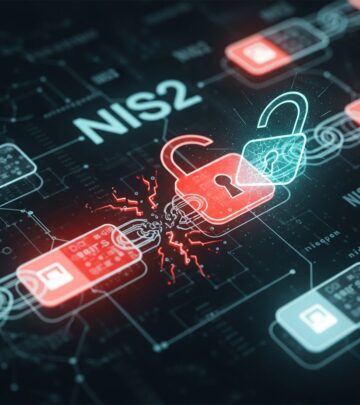
Battling EU Threats to Encryption Privacy
EU pushes for lawful access to encrypted data spark global privacy fears and security risks amid ongoing debates.

End-to-end encryption stands as a cornerstone of modern digital communication, safeguarding messages, calls, and data from prying eyes. Yet, in recent years, European Union institutions have intensified efforts to introduce mechanisms allowing government authorities to bypass these protections under the banner of public safety. This tension pits law enforcement needs against fundamental privacy rights, igniting debates that resonate far beyond Europe’s borders. As policymakers propose ‘lawful access’ solutions, critics warn of cascading vulnerabilities that could undermine trust in digital services worldwide.
The Rise of EU Encryption Mandates
The push for regulated access to encrypted content gained momentum around 2020, coinciding with Portugal’s presidency of the EU Council. Official documents from that period, including Council resolutions and European Commission communiqués, outlined ambitions to balance security with investigatory powers. These texts emphasized developing technologies that enable authorities to decrypt communications in targeted scenarios, often framed as responses to terrorism and child exploitation.
Central to these initiatives was the concept of ‘lawful access,’ a euphemism for requiring service providers to build in decryption capabilities or hand over keys. Proponents argued that absolute encryption hinders critical investigations, citing cases where encrypted apps shielded criminal networks. However, this overlooks existing legal tools like warrants for metadata or device seizures, which already provide substantial investigative leverage without altering core protocols.
Why Encryption Matters for Everyone
Encryption isn’t just for the suspicious; it’s essential for daily life. Journalists rely on it to protect sources, businesses secure trade secrets, and ordinary users shield personal conversations. Weakening it creates a single point of failure: if governments can access data, so can hackers exploiting the same flaws.
- Privacy Erosion: Private messages become fair game, chilling free expression.
- Economic Impact: Tech firms face compliance costs, potentially driving innovation away from Europe.
- Global Precedent: EU moves influence policies in other regions, amplifying risks.
Technical experts highlight that no ‘secure backdoor’ exists—any access method introduces exploitable weaknesses. Historical breaches, like those in compromised law enforcement tools, demonstrate this vividly.
Advocacy Efforts Taking Shape
Organizations like the Internet Society mobilized swiftly. Local chapters, particularly in Portugal, coordinated with allies to amplify concerns. They penned open letters published in major newspapers, rallying public and political support. These efforts stressed that true security stems from robust encryption, not its dilution.
Broader coalitions emerged, including tech companies, civil liberties groups, and academics. Joint statements urged the Commission to abandon backdoor pursuits, advocating instead for enhanced non-encrypting investigative techniques. In parliamentary hearings, witnesses dissected the technical impossibilities of selective access, swaying some legislators.
Divergent Views Across Member States
EU nations aren’t monolithic on this issue. While France and others champion access mandates, countries like Germany, the Netherlands, and Finland resist, citing cybersecurity perils. A leaked Spanish document even proposed outright encryption bans in certain contexts, underscoring the divide.
| Country | Stance on Encryption Access | Key Rationale |
|---|---|---|
| France | Supportive | Enhance anti-terror probes |
| Germany | Opposed | Protects economic security |
| Netherlands | Opposed | Risks systemic vulnerabilities |
| Sweden | Supportive | Combat child exploitation |
This fragmentation complicates consensus, buying time for opponents but prolonging uncertainty.
Technical Flaws in Proposed Solutions
Client-side scanning, a favored EU approach, inspects content pre-encryption on devices. Though marketed as targeted, it scales massively: billions of checks daily invite false positives and abuse. The Electronic Frontier Foundation critiqued this in 2023, noting it evades encryption entirely, creating surveillance infrastructure.
Other ideas, like key escrow, store decryption keys with third parties—vulnerable to subpoenas or hacks. Eurojust reports acknowledge encryption’s role in crime but fail to propose viable, secure alternatives without universal weakening.
Recent Developments and Pushback
By 2025, the Commission’s Internal Security Strategy reiterated ‘technology roadmaps’ for access, drawing sharp rebukes. Nearly 90 organizations signed letters decrying circumvention plans, with Statewatch among vocal critics. EU Parliament committees rejected mass scanning in key votes, preserving encryption protections.
These wins reflect sustained pressure. In 2023, opposition halted child sexual abuse material (CSAM) legislation mandating scans, affirming private communication as a human right.
Broader Global Implications
EU actions reverberate. US firms operating there must comply, potentially fragmenting global standards. Carnegie Endowment analyses trace the debate’s evolution, warning of eroded trust in tech ecosystems. Meanwhile, authoritarian regimes cite EU rhetoric to justify their crackdowns.
For businesses, uncertainty deters investment. A weakened EU digital market loses competitiveness against encryption-friendly jurisdictions.
Strategies for Defending Encryption
Future battles demand proactive measures:
- Public Awareness: Educate on encryption’s benefits via campaigns.
- Legislative Alliances: Support privacy-focused politicians.
- Technical Innovation: Advance quantum-resistant algorithms.
- International Coordination: Align with global standards bodies.
Users can contribute by adopting encrypted tools like Signal and advocating locally.
Frequently Asked Questions
What does ‘lawful access’ to encryption mean?
It refers to policies requiring providers to decrypt data for authorities upon legal request, often via built-in mechanisms.
Can backdoors be made secure?
Experts consensus is no; they inevitably create exploitable weaknesses affecting all users.
How has the EU Parliament responded?
Key committees have blocked scanning mandates, prioritizing encryption integrity.
Why do law enforcement push for this?
To access evidence in encrypted apps used by criminals, though alternatives exist.
What’s the status in 2026?
Debates persist with strategies advancing, but strong opposition maintains safeguards.
Conclusion: Safeguarding the Digital Future
The EU’s encryption encroachment tests the balance between safety and liberty. While genuine threats like crime warrant robust responses, undermining encryption sacrifices long-term security for short-term gains. Sustained advocacy has yielded victories, but vigilance remains essential. By championing unbreakable privacy tools, we ensure a safer, freer digital world for generations.
References
- Third Report of the Observatory Function on Encryption — Eurojust. 2023. https://www.eurojust.europa.eu/sites/default/files/Documents/pdf/joint_ep_ej_third_report_of_the_observatory_function_on_encryption_en.pdf
- Deep Concern over EU’s Plan to Weaken or Circumvent Encryption — Statewatch. 2025-05. https://www.statewatch.org/news/2025/may/deep-concern-over-eu-s-plan-to-weaken-or-circumvent-encryption/
- Fighting European Threats to Encryption: 2023 Year in Review — Electronic Frontier Foundation. 2023-12. https://www.eff.org/deeplinks/2023/12/fighting-european-threats-encryption-2023-year-review
- The Encryption Debate in the European Union: 2021 Update — Carnegie Endowment for International Peace. 2021-03. https://carnegieendowment.org/posts/2021/03/the-encryption-debate-in-the-european-union-2021-update
- Internal Security Strategy for the EU (ProtectEU) — European Commission. 2025. https://ec.europa.eu/info/strategy/priorities-2019-2024/promoting-our-european-way-life/internal-security_en
Similar Articles






Read full bio of Sneha Tete