Balanced IPv6 Security for Home Routers
Discover how modern IPv6 security balances end-to-end connectivity with robust protection for residential networks using proven CPE strategies.
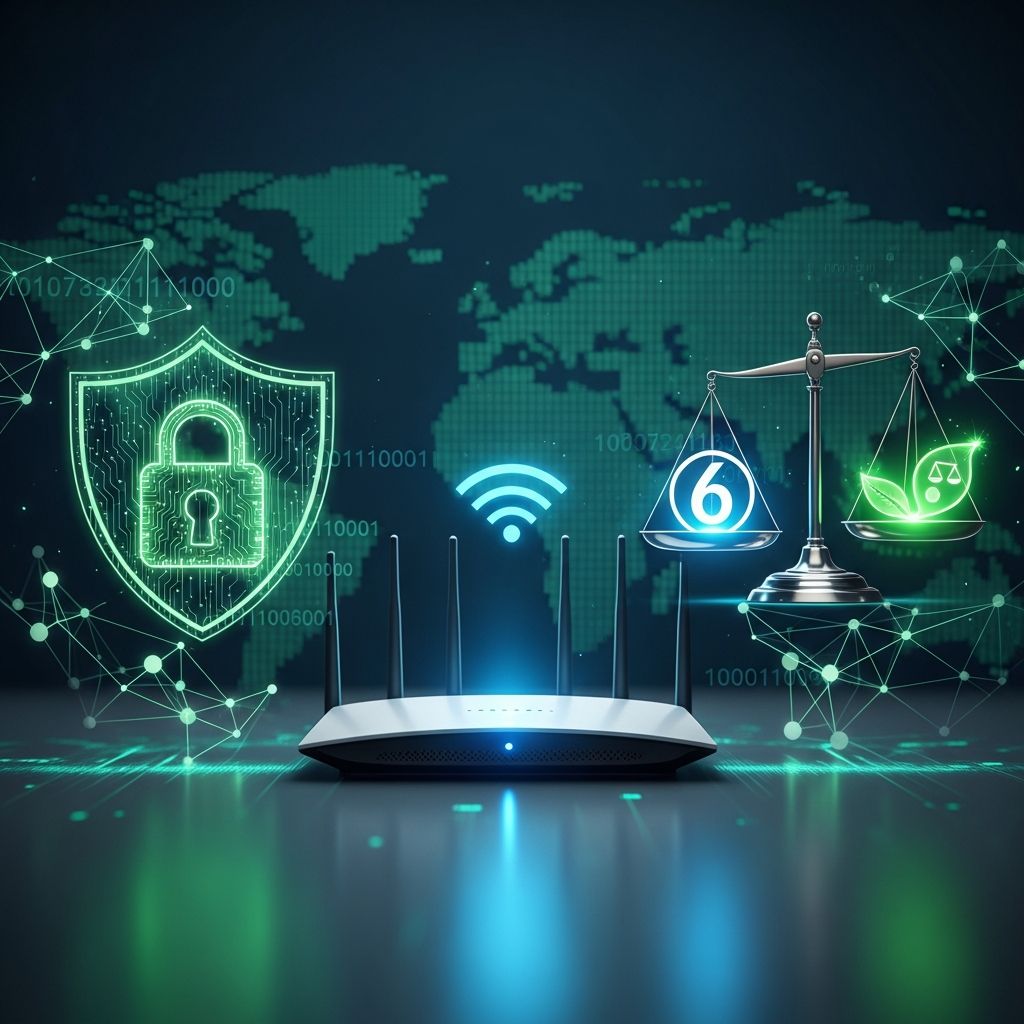
In the era of widespread IPv6 adoption, securing residential networks has become a critical challenge. Unlike IPv4, which relied heavily on Network Address Translation (NAT) for basic protection, IPv6 introduces unique addressing that enables true end-to-end communication. However, this openness demands smarter security measures for Customer Premises Equipment (CPE), such as home routers. A balanced security model emerges as a practical solution, permitting legitimate traffic while thwarting known dangers. This approach, refined through years of IETF discussions and real-world implementations, prioritizes usability without sacrificing safety.
The Evolution of IPv6 Security Challenges
IPv6 was designed to restore the Internet’s original end-to-end principle, where devices communicate directly without intermediaries altering packets. Yet, residential users expect firewalls to shield their networks from external probes. Traditional IPv4 setups used NAT as an implicit barrier, but IPv6’s global addressing eliminates this. Early IPv6 deployments faced a dilemma: overly restrictive firewalls stifled applications like peer-to-peer services, gaming, and IoT communications, while lax policies invited exploits.
Industry leaders recognized the need for nuanced policies. Service providers like Swisscom pioneered configurations that allow inbound connections by default, except for vulnerable ports. This shift contrasts with conservative models that drop all unsolicited packets, potentially breaking modern applications reliant on IPv6’s full capabilities.
Core Principles of Balanced Security
Balanced IPv6 security for CPE revolves around three pillars: permissiveness for legitimate traffic, proactive blocking of threats, and adaptability to evolving risks. The goal is to mimic IPv4’s de facto security while embracing IPv6’s strengths.
- Default Allow with Exceptions: Forward most inbound and outbound packets, blocking only those targeting known weak services like insecure remote access ports.
- Rate Limiting: Throttle initial connection attempts to deter scanning attacks without halting valid sessions.
- Centralized Updates: Enable providers to push rule changes, ensuring protection against new vulnerabilities.
This model supports protocols beyond TCP, including UDP, SCTP, and DCCP, and handles IPv6 extension headers comprehensively. It empowers users with options, from strict modes to fully open setups for advanced needs.
Implementing Rules in Residential CPE
Practical deployment involves a layered set of rules applied at the CPE firewall. Here’s how they work in sequence:
- Management Access: Permit provider-specific protocols (e.g., TR-069, SSH from NOC) for remote administration.
- Threat Blocking: Silently discard packets to high-risk ports, such as those used by default admin interfaces or worm-prone services.
- Open Connectivity: Allow all other unsolicited inbound traffic, with rate limits on SYN-like packets per source IP.
- Loopback Protection: Block packets looping back to the provider’s prefix to prevent abuse.
A sample port block list might target TCP/UDP 23 (Telnet), 2323, 5555, and others historically exploited due to weak credentials. Users can customize these, but defaults suffice for most households.
| Rule Category | Action | Protocols Affected | Rationale |
|---|---|---|---|
| Management | Allow (SP IPs only) | SSH, SNMP, TR-069 | Remote diagnostics |
| Weak Services | Drop | TCP/UDP select ports | Prevent unauthorized access |
| Unsolicited Inbound | Allow (rate-limited) | All others | Enable end-to-end apps |
| Loopback | Drop | Any to provider prefix | Avoid reflection attacks |
Real-World Deployments and Proven Track Record
Swisscom’s large-scale IPv6 rollout in Switzerland exemplifies success. Since implementing this model, they’ve reported zero major security incidents tied to CPE exposure. Off-the-shelf routers and managed devices alike support it, proving scalability across vendors.
Recent IETF drafts formalize these practices, building on RFC 6092’s simple security baseline. Updates as recent as 2024 refine rules for contemporary threats, ensuring longevity.
Comparing Security Profiles for IPv6 CPE
Residential users benefit from selectable profiles:
- Strict: Blocks all unsolicited inbound, akin to IPv4 NAT. Ideal for low-risk tolerance.
- Balanced: Allows most traffic, blocks threats. Default recommendation.
- Open: Minimal restrictions for developers or VPN users.
The balanced option strikes the optimal trade-off, fostering IPv6’s potential without undue risk.
Addressing Common Concerns and Mitigations
Critics worry about amplified attack surfaces. Rate limiting mitigates port scans effectively—e.g., capping SYN packets at 100/hour per IP. Extension headers, often abused, are fully processed to avoid DoS vectors.
IPv6-specific threats like Neighbor Discovery abuse are handled upstream by providers, complementing CPE rules. For IoT devices, prefix delegation ensures isolation without breaking connectivity.
Future Directions in IPv6 CPE Security
As IPv6 dominates—over 40% global adoption per recent stats—standards evolve. IETF’s v6ops group advocates dynamic policies via software updates. Integration with encrypted DNS and TLS 1.3 further hardens endpoints.
Providers should offer dashboards for rule tweaks, empowering users. Research into AI-driven threat detection promises even smarter defaults.
Practical Steps for Home Users and Providers
To adopt balanced security:
- Verify CPE firmware supports IPv6 firewall rules.
- Enable the balanced profile via admin interface.
- Monitor logs for anomalies.
- Subscribe to provider updates.
Providers: Centralize policy pushes and test rigorously before rollout.
Frequently Asked Questions (FAQs)
What is balanced IPv6 security?
It allows most IPv6 traffic through residential routers while blocking packets to vulnerable ports, balancing openness and safety.
Does it replace NAT in IPv6?
Yes, it provides equivalent protection without NAT’s limitations on inbound connections.
Is it safe for homes with IoT devices?
Absolutely, as threats target specific ports, not broad IoT protocols; use VLANs for extra segmentation.
How often are block lists updated?
Via provider pushes, typically quarterly or as new threats emerge.
Can I customize rules?
Yes, advanced users can edit port lists while retaining core protections.
This framework positions IPv6 residential networks for a secure, connected future. By prioritizing end-to-end principles with targeted defenses, balanced security paves the way for innovation.
References
- Balanced Security for IPv6 Residential CPE — M. Gysi et al., IETF Internet-Draft. 2024-01-22. https://datatracker.ietf.org/doc/html/draft-ietf-v6ops-balanced-ipv6-security-01
- Recommended Simple Security Capabilities in Customer Premises Equipment (CPE) for Providing Residential IPv6 Internet Service — C. Forsyth et al., RFC 6092. 2011-01-25. https://datatracker.ietf.org/doc/html/rfc6092
- Operational Security Considerations for IPv6 Networks — É. Vyncke et al., RFC 9099. 2021-07-19. https://www.rfc-editor.org/rfc/rfc9099.html
- Requirements for IPv6 in ICT Equipment — RIPE NCC. 2010-12-01. https://www.ripe.net/publications/docs/ripe-554
- Where Have All the Firewalls Gone? Security Consequences of IPv6-only Residential CPE — M. Crawdady et al., arXiv preprint. 2024-09-09. https://arxiv.org/abs/2509.04792
Similar Articles








Read full bio of medha deb