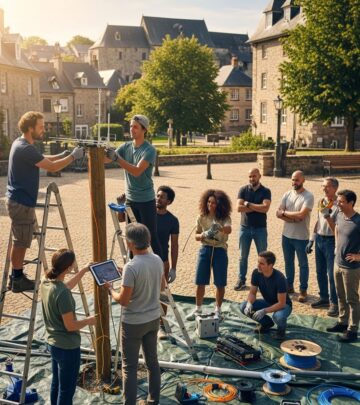
Digital Archiving: Armenia’s Scientific Heritage Initiative
Transforming scholarly knowledge through strategic digitization

Preserving Knowledge Through Digital Infrastructure: Armenia’s Approach to Academic Content Management
The transformation of scholarly communication in the modern era demands innovative approaches to information management. Nations worldwide recognize the critical importance of converting printed academic materials into digital formats, ensuring that valuable research remains accessible to future generations while simultaneously reducing physical storage requirements and expanding reach. Armenia has emerged as a notable example of institutional commitment to this transformation, establishing comprehensive infrastructure dedicated to converting extensive collections of peer-reviewed scholarly publications into searchable, web-accessible formats.
The Foundation: Understanding Armenia’s Academic Infrastructure
Armenia possesses a rich intellectual heritage spanning centuries of scientific inquiry and academic advancement. The National Academy of Sciences of Armenia represents one of the nation’s most significant custodians of scholarly knowledge, maintaining extensive collections of research publications that document the nation’s contributions to global scientific discourse. These institutions house materials covering diverse disciplines including physical sciences, biological research, engineering applications, social sciences, and humanities scholarship.
The challenge facing Armenian academic institutions mirrors those confronted by research libraries throughout Eastern Europe and Central Asia: how to balance traditional archival preservation with contemporary technological possibilities. Physical collections, while historically invaluable, present inherent vulnerabilities including deterioration through aging, vulnerability to environmental damage, limitations on simultaneous user access, and geographical barriers that restrict availability to researchers outside major urban centers.
Catalyzing Change: The Digitization Movement Begins
Recognition of these challenges prompted action in late 2011 when the Fundamental Scientific Library initiated an ambitious undertaking focused on converting existing scholarly content into digital formats. This endeavor represented more than a simple technical conversion process; it constituted a strategic institutional decision to modernize access pathways and enhance the utility of existing collections for contemporary and future researchers.
The initiative targeted a specific collection: thirteen peer-reviewed academic journals published by the National Academy of Sciences. This focused approach allowed planners to develop refined methodologies, test technological systems, and establish quality assurance procedures before potentially expanding to encompass broader collections. The journals selected represented significant intellectual output across multiple scientific domains, making them valuable test cases for demonstrating the utility of digitization efforts.
Setting Strategic Objectives
- Convert printed academic journals spanning multiple decades into machine-readable digital formats
- Implement technological systems enabling full-text search capabilities across converted materials
- Create publicly accessible online interfaces allowing researchers worldwide to discover and retrieve scholarly content
- Establish metadata systems enabling proper cataloging and organization of converted materials
- Ensure long-term preservation of digital files through robust data management protocols
- Integrate Armenian scholarly content into international academic networks and resource-sharing frameworks
Technical Architecture and Implementation Strategy
Establishing digital library infrastructure requires coordinated attention to multiple technical and organizational dimensions. The Armenian implementation approach balanced pragmatic resource constraints with international best practices for digital curation.
Digitization Center Development
A dedicated digitization center was established within the Fundamental Scientific Library’s physical plant. This facility incorporated specialized equipment capable of converting printed materials into high-resolution digital images while minimizing potential damage to original documents. The equipment specifications reflected considerations of speed, image quality, optical character recognition capabilities, and long-term format sustainability.
Personnel training proved equally important as technological infrastructure. Library staff required instruction in proper handling of original materials, operation of specialized scanning equipment, quality control procedures, and metadata creation standards. International technical assistance programs provided expertise transfer, enabling Armenian professionals to develop competencies in digital preservation methodologies.
Repository Architecture and User Access
The digitized content required robust repository systems capable of managing large document collections, facilitating searching across multiple parameters, and delivering materials reliably to geographically dispersed users. Rather than developing custom software from inception, implementation planners adopted proven open-source repository platforms that had demonstrated effectiveness in comparable institutional contexts.
The user interface design prioritized accessibility for researchers with varying technological sophistication levels. Intuitive search functionality, browse capabilities organized by subject classification, and basic to advanced search options accommodated diverse researcher needs. Metadata optimization ensured that search engines could effectively index repository content, improving discoverability through mainstream web search platforms.
The Armenian Research and Academic Repository Initiative
Beyond basic digitization, the broader institutional vision encompassed creating a comprehensive research portal functioning as a gateway to Armenian scholarly output. The Armenian Research and Academic Repository (ARAR) initiative represented an ambitious expansion of foundational digitization work, positioning Armenia within international networks of academic resource-sharing and scholarly communication.
Multi-Phase Development Strategy
The repository development unfolded across multiple phases, each building upon achievements of preceding stages:
- Phase One: Establishing core digitization infrastructure and converting initial journal collections into machine-readable formats
- Phase Two: Expanding content scope to encompass additional publication types and developing standardized metadata frameworks
- Phase Three: Creating the unified ARAR portal integrating multiple content sources and establishing international interoperability connections
- Phase Four: Implementing advanced functionality including semantic web applications, cloud-based infrastructure, artificial intelligence-powered discovery tools, and mobile application development
Integration with International Academic Networks
Strategic importance attached to embedding Armenian scholarly resources within international research and learning communities. This integration facilitated cross-border collaboration, enhanced visibility of Armenian contributions to global scientific discourse, and positioned Armenian researchers as participants in worldwide knowledge networks rather than operating in isolated institutional contexts.
International standards compliance became essential for achieving meaningful interoperability. Repository systems implemented protocols enabling federated searching across multiple institutional repositories, metadata harvesting through standardized protocols, and citation linking connecting related scholarly works across institutional boundaries.
Addressing Institutional Challenges and Opportunities
Resource Considerations
Digitization initiatives require sustained financial investment. Operating costs encompass equipment acquisition and maintenance, specialized personnel compensation, software licensing or development, physical infrastructure expenses, and ongoing preservation activities. Armenian institutions addressed these constraints through international grant programs, partnerships with research networks, and phased implementation approaches allowing costs to be distributed over extended timeframes.
Long-Term Sustainability Planning
Successful digital initiatives extend far beyond initial implementation phases. Institutional commitment to maintaining systems, updating technology infrastructure, refreshing digital formats as standards evolve, and continuously adding new content proved as important as launch-phase activities. Planning frameworks incorporated succession planning for specialized personnel, contingency reserves for equipment replacement, and formal policies governing collection management decisions.
Broader Applications and Expansion Possibilities
The foundational work in journal digitization opened possibilities for expanding content scope. Armenian institutions recognized potential benefits of converting additional material categories including monographs published by academic presses, conference proceedings, dissertation and thesis collections, archival manuscripts, historical maps and cartographic materials, and unique institutional records documenting Armenian scientific history.
Different content categories required adapted scanning and processing workflows. Some materials demanded specialized equipment for optimal capture, while others benefited from new technical approaches. By establishing core competencies through focused journal digitization, institutions created platforms enabling more ambitious content expansion programs.
Emerging Technological Frontiers
Beyond traditional digitization and repository infrastructure, forward-looking planning encompassed emerging technologies offering enhanced research functionality:
- Semantic Web Applications: Implementing structured data frameworks enabling machines to understand relationships between concepts and automatically generate useful connections between related scholarly works
- Cloud Computing Infrastructure: Transitioning from locally-managed servers to scalable cloud-based systems providing redundancy, disaster recovery capabilities, and flexible resource allocation
- Artificial Intelligence Applications: Deploying machine learning systems for automated metadata extraction, document classification, plagiarism detection, and advanced search functionality
- Mobile Applications: Developing smartphone and tablet applications enabling researchers to access repository content through mobile devices, supporting modern research workflows conducted across multiple devices
Community Engagement and Researcher Training
Digital infrastructure success depends substantially on community adoption. Institutions invested in researcher education programs explaining repository capabilities, demonstrating effective search strategies, and encouraging submission of new materials to collections. Faculty workshops, graduate student training sessions, and online documentation helped maximize utilization of newly available resources.
Outreach programs targeting international researchers highlighted Armenian scholarly contributions, encouraging citations of Armenian-authored research and creating opportunities for cross-border research collaborations. Participation in international scholarly networks expanded awareness of available resources among researchers who might not otherwise have discovered Armenian academic output.
Measuring Success and Demonstrating Impact
Meaningful assessment requires establishing metrics capturing both quantitative utilization indicators and qualitative research community feedback. Usage statistics including database searches, document downloads, and repeated access patterns provided evidence of effective resource utilization. Citation tracking demonstrated whether digitized materials influenced subsequent scholarly work, indicating meaningful research impact.
International recognition through inclusion in subject-specific research directories, library consortium memberships, and citation indexing services validated the quality and relevance of digitization efforts. Partnerships with major international research initiatives signified institutional achievement of technical and organizational standards recognized globally.
Lessons for Other Emerging Research Communities
Armenia’s digitization journey offers insights applicable to other regions developing digital scholarly infrastructure. Successful implementation emphasizes gradual expansion from focused initial projects rather than attempting comprehensive conversion of all materials simultaneously. Institutional partnerships combining financial resources, technical expertise, and shared infrastructure prove more sustainable than isolated individual institution efforts. International standards compliance, despite requiring upfront learning investments, creates long-term advantages enabling resource sharing and interoperability.
Commitment to open access principles democratizing knowledge dissemination reflects both practical benefits and principled commitments to advancing scientific understanding beyond traditional market-based distribution constraints. Developing nations particularly benefit from open models reducing barriers that geographic location or institutional affiliation might otherwise create.
Forward Momentum and Future Directions
Armenia’s scientific library digitization represents ongoing rather than completed effort. Continuous technological evolution, expanding content scope, and emerging scholarly communication models create dynamic contexts requiring ongoing institutional adaptation and investment. The infrastructure established through initial journal digitization creates foundations supporting progressively ambitious initiatives, from comprehensive subject-specific collections to multimedia materials capturing diverse knowledge expressions.
Successful transitions from traditional print-based academic communication to hybrid models incorporating digital distribution require institutional cultures embracing technological change while maintaining rigorous quality standards and scholarly integrity. Armenian institutions demonstrate that emerging research communities can achieve sophisticated digital infrastructure through strategic planning, international collaboration, sustained institutional commitment, and creative approaches to resource mobilization.
References
- Twenty Years After: Armenian Research Libraries Today — CUNY Academic Works. 2012. https://academicworks.cuny.edu/cgi/viewcontent.cgi?article=1076&context=hc_pubs
- Armenian Research & Academic Repository in Action — Armenian Research & Academic Repository. 2012. https://arar.sci.am/Content/264558/67-79.pdf
- Establishing Content Creation Centre in the Fundamental Scientific Library, Armenia — Internet Society. December 2012. https://www.internetsociety.org/blog/2012/12/establishing-content-creation-centre-in-the-fundamental-scientific-library-armenia/
- ASNET-AM Facilitates the Creation of Digital Libraries and Repositories in Armenia — GEANT Association. January 19, 2024. https://connect.geant.org/2024/01/19/asnet-am-facilitates-the-creation-of-digital-libraries-and-repositories-in-armenia
- Wikimedia Armenia/Reports/2023-04 — Wikimedia Meta-Wiki. April 2023. https://meta.wikimedia.org/wiki/Wikimedia_Armenia/Reports/2023-04
- An Innovative Approach to Creating Digital Libraries and Repositories in Armenia — In the Field Stories. https://www.inthefieldstories.net/an-innovative-approach-to-creating-digital-libraries-and-repositories-in-armenia
Similar Articles







Read full bio of Sneha Tete