Arctic Warming: Crossing the Zero Mark
As Arctic temperatures edge past freezing, permafrost thaws and ecosystems transform, signaling irreversible changes ahead.
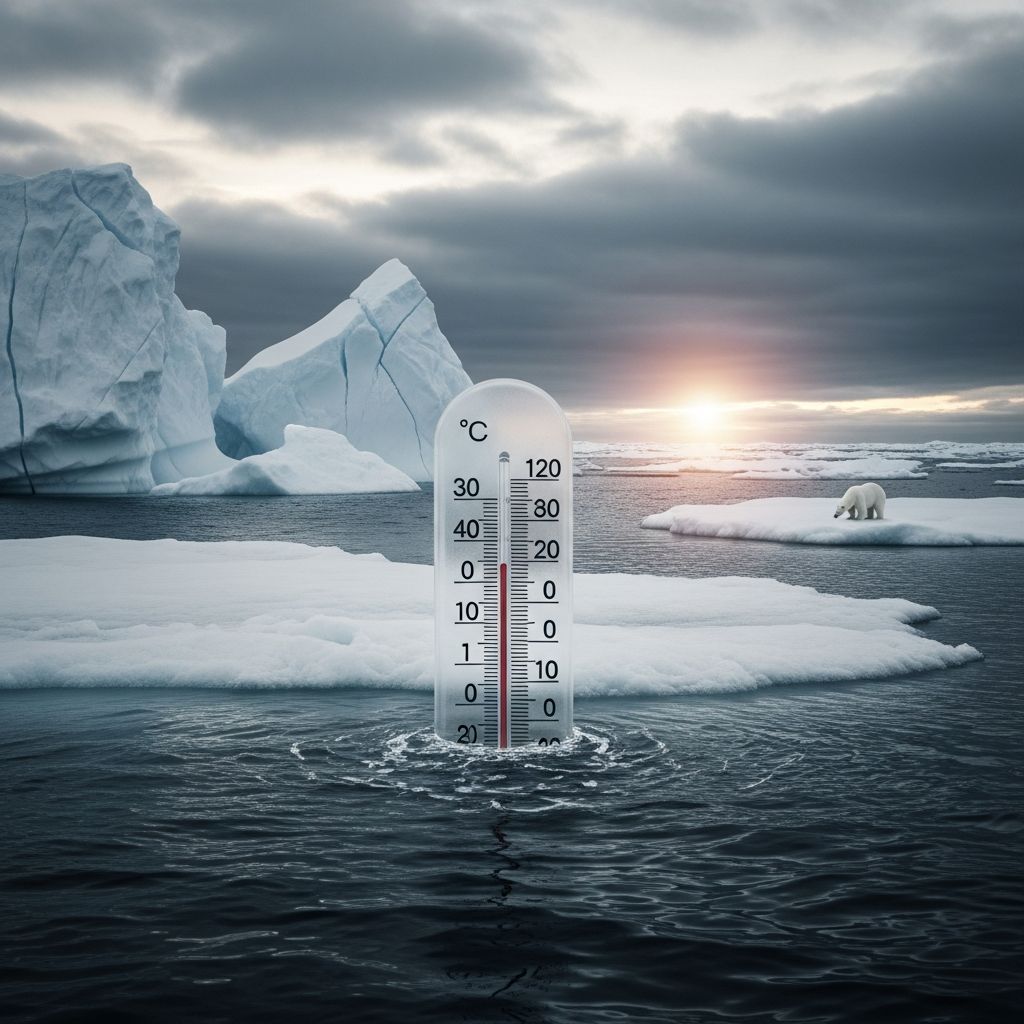
In the vast, frozen expanses of Alaska’s northern reaches, a subtle yet monumental shift is underway. For millennia, average annual temperatures have lingered well below freezing, preserving a delicate balance of ice, snow, and permafrost. Today, however, scientific observations reveal these regions are approaching—and in places surpassing—the pivotal 0°C threshold. This crossing marks the onset of profound environmental transformations, where frozen ground thaws, landscapes destabilize, and entire ecosystems begin to unravel. Drawing from authoritative climate data and park service reports, this article delves into the mechanisms, consequences, and future outlook of this Arctic tipping point.
The Freezing Foundation of Arctic Environments
The Arctic’s defining feature has long been its perennially subzero climate. Permafrost, a layer of soil that remains frozen year-round, underpins much of Alaska’s North Slope. This frozen substrate has maintained stable ground conditions, supported unique vegetation patterns, and regulated water flows for thousands of years.
Recent analyses from the U.S. National Park Service highlight that Arctic parks, including those on the North Slope, have experienced mean annual air temperatures below 0°C throughout recorded history until recent decades.1 This cold lock has prevented the ground from thawing completely, even in summer, creating a barrier that shapes rivers, lakes, and wildlife habitats.
- Permafrost acts as a natural sealant, trapping organic carbon and preventing water infiltration.
- It supports specialized tundra plants adapted to shallow root zones.
- Cold air stabilizes ice formations like glaciers and aufeis (seasonal ice fields).
Without this chill, the Arctic’s physical and biological architecture crumbles. As temperatures rise, even incrementally, the integrity of these systems is tested.
Recent Temperature Surges and Threshold Breaching
Climate records paint a stark picture of acceleration. Between 1950 and 2021, average annual temperatures in communities adjacent to Arctic national parks climbed by over 2.6°C.1 This warming, driven by global greenhouse gas emissions, is not uniform but disproportionately intense in high latitudes—a phenomenon known as Arctic amplification.
Projections from NOAA and other agencies forecast an additional 7°C rise by 2100, pushing many areas firmly above freezing.1 Communities like Utqiaġvik (formerly Barrow) have already logged years where annual averages flirt with or exceed 0°C, a rarity in modern observational history.
| Period | Average Increase (°C) | Implications |
|---|---|---|
| 1950–2000 | 1.5 | Initial permafrost softening |
| 2000–2021 | 1.1 | Active layer thickening |
| Projected 2100 | +7 total | Near-total thaw in parks |
These shifts are unprecedented, eclipsing natural variability seen in paleoclimate records. The zero-degree line, once a distant boundary, now bisects Arctic parks, heralding a new era.
Permafrost Thaw: The Ground Beneath Shifts
Permafrost covers nearly all of Alaska’s five Arctic national parks today. Models predict that by century’s end, roughly half will thaw due to sustained warming.1 Thawing occurs in stages: first, the active layer (seasonally thawed topsoil) deepens; then, deeper permafrost destabilizes.
This process unleashes cascading effects. Organic matter locked in ice decomposes, releasing methane and CO2—potent greenhouse gases that amplify warming. Hydrologic changes follow as water once trapped seeps downward, altering stream flows and lake levels.
- Thermokarst lakes: Depressions form as ice-rich permafrost collapses, creating new water bodies that accelerate local warming.
- Drainage shifts: Lakes drain rapidly when underlying ice melts, drying adjacent wetlands.
- Carbon feedback: Thaw exposes ancient peat, fueling emissions estimated at billions of tons regionally.
Landslides and Destabilization: Nature’s Response
Warming doesn’t just melt ice; it mobilizes the earth. Satellite imagery reveals a surge in active-layer detachments and retrogressive thaw slumps since the mid-2000s’ record heatwaves.1 These landslides scar hillsides, depositing sediment into rivers and coastlines.
Frozen debris lobes—slow-moving masses of rock and ice—pose another threat. Perched just below 0°C, they accelerate with minimal warming, burying valleys and infrastructure. In Gates of the Arctic National Park, such features have quickened pace, endangering trails and wildlife corridors.
Coastal erosion intensifies too, as thawing permafrost undermines bluffs, eroding up to 25 meters annually in exposed areas. This reshapes shorelines and contaminates marine food webs with sediments.
Streams, Lakes, and the Hydrologic Overhaul
Arctic waterways are transforming. Warmer air heats streams, stressing cold-water species like grayling and Dolly Varden char. Permafrost thaw opens new subsurface flow paths, reducing surface water in some basins while flooding others.
Lakes perched atop ice wedges are vanishing as thaw causes catastrophic drainage. This disrupts bird nesting grounds and fish overwintering sites. By mid-century, models suggest widespread hydrologic reconfiguration, with some rivers gaining flow from meltwater and others shrinking.
Ecological Ripples: Wildlife and Plants in Flux
Biodiversity hangs in the balance. Tundra shrubs encroach as thaw allows deeper rooting, shading out mosses and lichens that caribou depend on. Shrub expansion has increased 20–50% in some parks since 1980.
Migratory birds face breeding ground loss from thermokarst and flooding. Predators like foxes may thrive initially, but long-term habitat fragmentation threatens balance. Marine incursions from eroding coasts introduce saltwater, killing freshwater vegetation.
Indigenous communities, reliant on subsistence hunting, report declining caribou herds and altered fish stocks, compounding cultural and food security challenges.
Projections: A Transformed Arctic by 2100
By 2100, Arctic parks could see sea ice vanish for months, snow cover shrink dramatically, and average temperatures stabilize above freezing.1 Permafrost loss would exceed 50%, converting frozen tundra to wetlands or boreal forest analogs.
These changes echo globally: amplified emissions, sea-level contributions from Greenland melt influenced by regional warming, and biodiversity hotspots at risk. Mitigation demands rapid emissions cuts, but adaptation—resilient infrastructure, restored habitats—offers hope.
Human Dimensions on the North Slope
Beyond ecology, the North Slope hosts energy operations. The Arctic Slope Regional Corporation (ASRC), representing Iñupiat shareholders, balances resource development with environmental stewardship. Infrastructure like pipelines faces thaw-induced risks, prompting innovations in monitoring.2
Debates over oil exploration in sensitive areas like the Arctic National Wildlife Refuge underscore tensions between economic gains and ecological preservation. ASRC’s $2.5B revenue supports communities, yet locals voice concerns over sacred lands and subsistence.4
Strategies for Resilience
Adaptation strategies include:
- Permafrost-aware engineering: Elevated roads, thermosyphons to maintain ground chill.
- Community-led monitoring: Indigenous knowledge integrated with satellite data.
- Policy: Protected expansions, emissions targets aligned with Paris Agreement.
Global cooperation is key, as Arctic changes reverberate worldwide.
Frequently Asked Questions
What happens when Arctic temperatures exceed 0°C?
Permafrost thaws, leading to ground collapse, increased emissions, and ecosystem shifts.
How much has the Arctic warmed recently?
Over 2.6°C since 1950 in North Slope areas, with more projected.
Will all permafrost disappear?
Models predict about half in Arctic parks by 2100 under moderate scenarios.
What are the risks to wildlife?
Habitat loss, food chain disruptions, and invasive species gains.
Can we stop these changes?
Mitigation slows them; adaptation is essential.
References
- Crossing the Zero-Degree Threshold — U.S. National Park Service. 2022. https://www.nps.gov/articles/000/aps-22-1-1.htm
- Arctic Slope Regional Corporation Growth Strategy — Porter’s Five Forces Analysis. 2023. https://portersfiveforce.com/blogs/growth-strategy/asrc
- The Most Powerful Arctic Oil Lobby Group You’ve Never Heard Of — Center for American Progress. 2018. https://www.americanprogress.org/article/powerful-arctic-oil-lobby-group-youve-never-heard/
Similar Articles







Read full bio of medha deb