Africa’s Digital Leap: Building Internet Foundations
Unlocking Africa's potential through robust internet infrastructure, regional collaboration, and innovative connectivity solutions for a prosperous digital future.
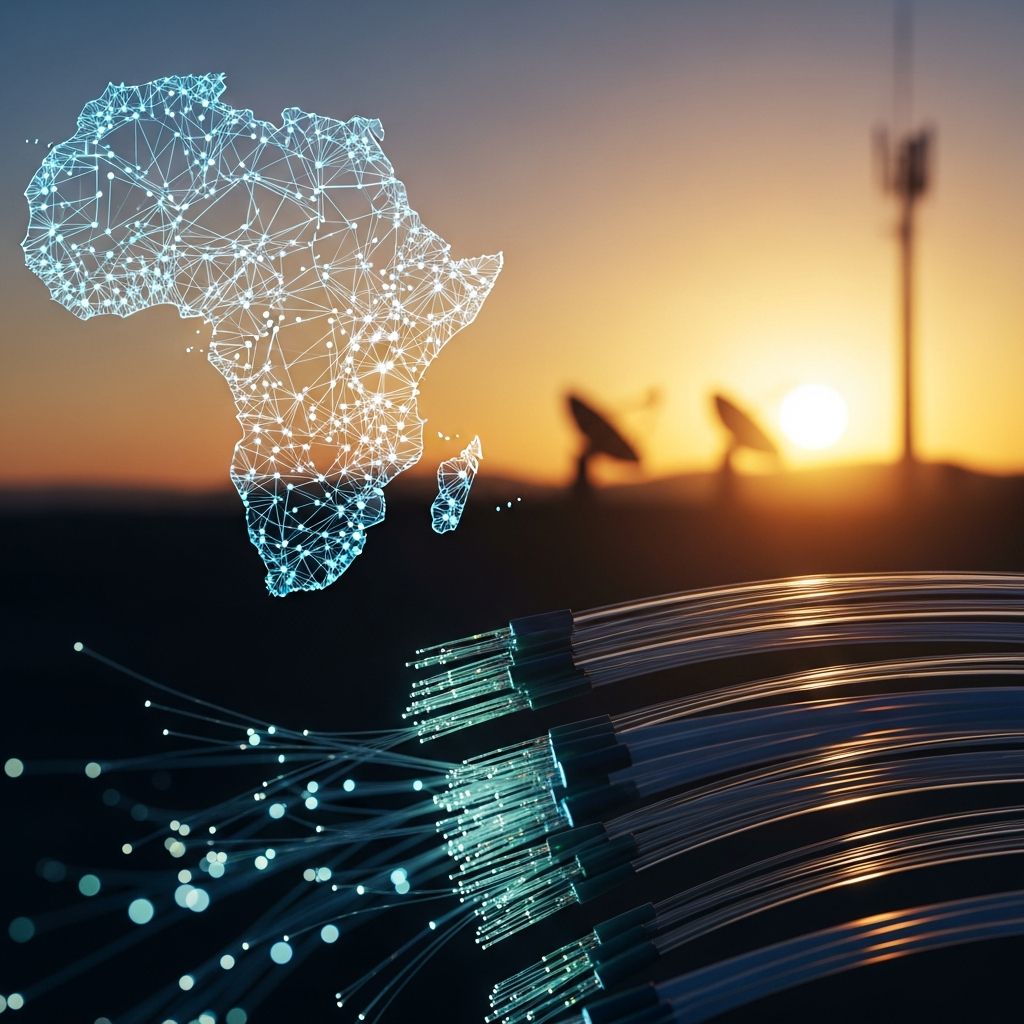
Africa stands at the cusp of a monumental shift powered by digital connectivity. With a youthful population exceeding 1.4 billion and rapidly growing mobile penetration, the continent is poised to harness the internet as a catalyst for economic growth, education, healthcare, and social inclusion. Yet challenges like limited infrastructure, high costs, and regulatory hurdles persist. This article delves into the transformative initiatives, technological advancements, and collaborative efforts driving Africa’s internet revolution, drawing on recent high-impact programs to illuminate a path forward.
The Imperative of Universal Connectivity
Internet access is no longer a luxury but a necessity for Africa’s development. In 2025, while mobile subscriptions surpass 1 billion, fixed broadband lags significantly, with penetration rates below 5% in many nations according to the ITU’s State of Broadband report. This digital divide exacerbates inequalities, leaving rural communities and small businesses disconnected from global markets.
Key drivers include surging data demand from streaming, e-commerce, and remote work. Sub-Saharan Africa’s internet traffic grew 30% annually pre-2025, fueled by affordable smartphones. Bridging this gap could add $300 billion to GDP by 2025, per World Bank estimates, through enhanced productivity and new digital jobs.
- Urban-Rural Disparity: Cities like Nairobi and Lagos boast 50%+ penetration, while rural areas hover at 20%.
- Gender Gap: Women are 17% less likely to use mobile internet, per GSMA data.
- Youth Opportunity: 60% of Africans under 25 crave digital skills for entrepreneurship.
Major Initiatives Reshaping the Landscape
Ambitious multi-billion-dollar programs are accelerating connectivity. The World Bank’s Inclusive Digitalization in Eastern and Southern Africa (IDEA) Program exemplifies this momentum.
| Program | Funding | Countries | Target Reach |
|---|---|---|---|
| IDEA Phase 1 | $880M (WB + AFD) | Angola, DRC, Malawi | 50M people |
| IDEA Full Scope | $2.48B | 15 countries | 180M people |
| PDAA Goal | Multi-partner | Continent-wide | 1B by 2030 |
The IDEA Program emphasizes speed and scale, integrating internet with electricity access—a critical synergy since 600 million Africans lack power. By 2033, it aims for resilient digital foundations via fiber backbones and 5G rollout. Similarly, the Partnership for Digital Access in Africa (PDAA) unites governments, firms, and NGOs to tackle affordability, infrastructure, and skills.
Infrastructure Breakthroughs: From Cables to IXPs
Submarine cables have revolutionized bandwidth. Landings like SEACOM and EASSy in Mozambique slashed costs by 90% since 2010, boosting international capacity 100-fold. Today, cables like 2Africa and Equiano encircle the continent, enabling terabit speeds.
Local Internet Exchange Points (IXPs) keep traffic onshore, cutting latency and costs. LINX’s expansions in Nairobi, Mombasa, and Accra exemplify this: peering reduces reliance on expensive international routes, retaining economic value locally. In Kenya, IXPs handle 10% of traffic, improving speeds by 50% for users.
National projects shine too. Rwanda’s SMART plan post-2015 liberalized markets, surging penetration from 10% to 50%. Cameroon’s CFA207 billion fiber initiative will connect 3,300 km, prioritizing underserved areas.
Policy Reforms and Regulatory Wins
Governments are liberalizing markets and incentivizing investment. Rwanda’s 2006 reforms attracted operators, while regional blocs like COMESA harmonize spectrum policies. Open-access mandates ensure competitors share infrastructure, lowering entry barriers.
Electricity-internet bundling, as in IDEA, addresses power gaps. Solar-powered base stations and microgrids power 20% of new sites, per Broadband Commission data.
Private Sector’s Pivotal Role
Telecom giants like MTN and Vodacom invest billions in 4G/5G, while hyperscalers build data centers. Africa’s 200+ Tier III facilities represent 1.5% of global capacity, but demand surges with cloud adoption. Facilities in Johannesburg and Lagos host AI and fintech, creating 100,000 jobs indirectly.
Startups thrive: Jumia and Flutterwave leverage connectivity for e-commerce worth $50B annually. Public-private partnerships (PPPs) fund 40% of rural towers.
Overcoming Persistent Barriers
Despite progress, hurdles remain:
- Affordability: 1GB costs 7% of income vs. 2% globally.
- Skills Deficit: Only 20% of youth digitally literate.
- Cyber Risks: Attacks up 300% since 2020.
Solutions include zero-rating education apps, device subsidies, and cybersecurity frameworks like the Malabo Convention.
Spotlight: Country Success Stories
Rwanda: From laggard to leader via broadband-first policies, now 70% unique subscribers.
Kenya: M-Pesa’s model inspires fintech; IXPs and undersea cables fuel Silicon Savannah.
Nigeria: 5G auctions raised $800M, targeting 90% coverage by 2027.
Future Horizons: AI, 6G, and Beyond
By 2030, 80% penetration is feasible with 6G trials and satellite like Starlink complementing fiber. AI-driven agriculture could double yields for 500M farmers. Digital IDs streamline services for 400M unbanked.
Regional integration via AfCFTA will amplify e-commerce to $450B by 2035.
FAQs
Q: How many Africans lack internet access?
A: About 600 million, mostly rural, per 2025 ITU data.
Q: What’s the economic impact of better connectivity?
A: Up to $300B GDP boost and 85M jobs by 2030, World Bank projects.
Q: Role of data centers in Africa?
A: Essential for low-latency cloud, AI, hosting local content to cut costs 40%.
Q: How do IXPs benefit users?
A: Faster speeds, lower bills by routing traffic locally vs. overseas.
Q: Key to success?
A: PPPs, policy harmony, power integration, skills training.
Conclusion: A Connected Continent Awaits
Africa’s digital leap hinges on sustained investment, innovation, and collaboration. Programs like IDEA and PDAA, paired with infrastructure like cables and IXPs, position the continent for inclusive growth. By prioritizing foundations today, Africa unlocks tomorrow’s opportunities in education, health, and prosperity for all.
References
- Unlocking Eastern and Southern Africa’s digital future — World Bank Blogs. 2025-05. https://blogs.worldbank.org/en/nasikiliza/going-bigger-faster-together-unlocking-eastern-and-southern-africas-digital-future-afe-0525
- The State of Broadband in Africa 2025 — Broadband Commission/ITU. 2025-09. https://www.broadbandcommission.org/wp-content/uploads/dlm_uploads/2025/09/The-State-of-Broadband-in-Africa.pdf
- Partnership for Digital Access in Africa — PDAA. Accessed 2026. https://pdaa.com
- The State of Broadband in Africa 2025 — ITU. 2025. https://www.itu.int/dms_pub/itu-s/opb/pol/S-POL-BROADBAND.32-2025-PDF-E.pdf
- Why Keeping Africa’s Internet Traffic Local Matters — Data Governance in Africa Initiative (YouTube transcript summary). 2026. https://www.youtube.com/watch?v=IT0wyO4x5vg
Similar Articles







Read full bio of medha deb