Africa’s 4th DNS Forum: Marrakech 2016
Discover how Marrakech hosted Africa's key DNS event, fostering partnerships for domain industry growth across the continent.
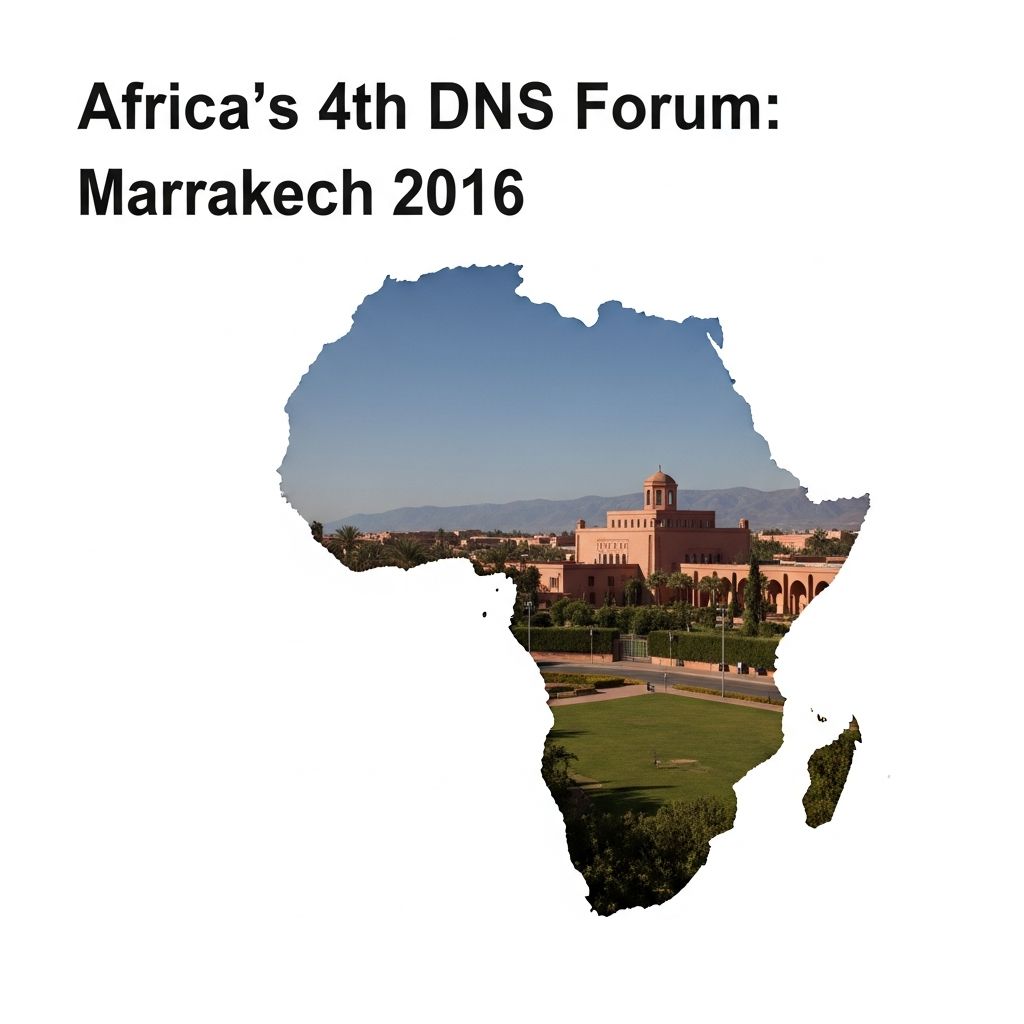
The Domain Name System (DNS) serves as the internet’s phonebook, translating human-readable domain names into machine-readable IP addresses. In Africa, where internet adoption is surging, robust DNS infrastructure is vital for digital economy growth. The 4th African DNS Forum, held in Marrakech, Morocco, from March 4-6, 2016, marked a pivotal moment in regional efforts to enhance this critical system. Organized collaboratively, the event drew technical specialists from across Africa and beyond, emphasizing collaboration for a stronger domain sector.
Event Overview and Strategic Importance
Hosted at the luxurious Pullman Marrakech Palmeraie Resort and Spa, the forum built on the momentum of prior gatherings in Durban (2013), Abuja (2014), and Nairobi (2015). This annual platform has evolved into a cornerstone for DNS stakeholders, addressing challenges like infrastructure gaps, cybersecurity threats, and regulatory harmonization. With Africa’s internet users projected to reach over 1 billion by 2025 according to ITU data, events like this are essential for capacity building and innovation.
The forum’s timing in early 2016 aligned with global DNS transitions, including ICANN’s stewardship shift from U.S. oversight, influencing African perspectives on governance. Participants engaged in workshops, panels, and networking, tackling real-world issues from IPv6 adoption to DNSSEC implementation.
Key Organizers and Global Partnerships
Central to the event’s success was the partnership model involving Morocco’s Agence Nationale de Réglementation des Télécommunications (ANRT), the Africa Top-Level Domain Association (AFTLD), ICANN, and the Internet Society (ISOC). ANRT’s role as host underscored Morocco’s leadership in North African telecom regulation.
- ANRT: Provided local expertise and venue support, showcasing Morocco’s advanced ICT policies.
- AFTLD: Represented African ccTLD operators, advocating for regional standards.
- ICANN: Delivered insights on global root zone management and new gTLDs.
- ISOC: Focused on community-driven internet development and security best practices.
These alliances highlighted a multi-stakeholder approach, mirroring global internet governance models and fostering knowledge exchange.
Central Theme: Building Alliances for Domain Growth
Under the banner “Strengthening Partnerships for Domain Name Industry Development in Africa,” discussions centered on actionable strategies. Sessions explored how collaborations could accelerate ccTLD maturity, reduce latency through anycast deployments, and promote local content hosting. A key takeaway was the need for public-private partnerships to fund DNS infrastructure, especially in underserved regions.
Panelists debated the economic impact of domain registration growth. For instance, mature ccTLDs like .za (South Africa) generate significant revenue, funding further development—a model for others like .ng (Nigeria) or .ke (Kenya).
Technical Workshops and Skill Enhancement
Hands-on sessions formed the forum’s backbone, equipping attendees with practical skills:
| Workshop Topic | Focus Areas | Expected Outcomes |
|---|---|---|
| DNSSEC Deployment | Signing zones, key management | Enhanced security against cache poisoning |
| Root Server Operations | Anycast, monitoring tools | Improved resilience and speed |
| IPv6 and DNS | Transition strategies | Future-proofing African networks |
| Registry Software | Best practices, open-source tools | Efficient management systems |
These targeted trainings addressed Africa’s unique challenges, such as limited bandwidth and power reliability, promoting scalable solutions.
Speakers and Expert Insights
Renowned figures enriched the discourse. ICANN representatives outlined IANA transition implications for Africa. AFTLD leaders shared case studies on harmonizing policies across borders. ISOC experts stressed community networks’ role in DNS accessibility. Local Moroccan regulators discussed regulatory sandboxes for innovation.
The forum was a catalyst for Africa’s DNS evolution, bridging local needs with global standards.
Challenges Facing African DNS Landscape
Africa’s DNS ecosystem grapples with hurdles like low registration rates, skill shortages, and geopolitical fragmentation. Only a fraction of potential domains are registered, limiting online presence. Cybersecurity remains nascent, with DDoS attacks rising. The forum proposed solutions: regional peering points, shared root server instances, and youth training programs.
Outcomes and Forward Momentum
By event’s end, participants endorsed a Marrakech Declaration, committing to joint initiatives like a pan-African DNS working group and annual capacity audits. Follow-up webinars sustained engagement. The forum spurred registrations in host countries and inspired similar events elsewhere.
Broader Implications for Continental Internet
Beyond technicalities, the gathering advanced digital inclusion. Strong DNS supports e-commerce, e-government, and education platforms. By 2026, reflecting on 2016’s efforts reveals sustained growth: African ccTLDs now manage millions of domains, per AfTLD reports. This foundation aids Africa’s integration into the global digital economy.
Lessons for Future Forums
- Prioritize emerging tech like DNS over HTTPS.
- Enhance gender diversity in delegations.
- Integrate francophone and lusophone perspectives.
- Leverage data analytics for impact measurement.
Frequently Asked Questions
What was the main goal of the 4th African DNS Forum?
To unite experts in strengthening partnerships for Africa’s domain name industry development.
Who were the primary organizers?
ANRT (Morocco), AFTLD, ICANN, and ISOC.
Where and when did it occur?
Marrakech, Morocco, March 4-6, 2016.
What technical topics were covered?
DNSSEC, root servers, IPv6, and registry operations.
How has it impacted Africa since 2016?
Boosted ccTLD growth, security adoption, and regional cooperation.
This event exemplified proactive stewardship, positioning Africa as a dynamic player in internet evolution. Its legacy endures in resilient networks and empowered communities.
References
- ICANN Transition to a Multi-Stakeholder Model — ICANN. 2016-10-01. https://www.icann.org/resources/pages/iana-functions-transition-2016-01-25-en
- Measuring the Information Society Report — International Telecommunication Union (ITU). 2016-12-01. https://www.itu.int/en/ITU-D/Statistics/Pages/publications/mis2016.aspx
- AfTLD Annual Report 2016 — Africa Top-Level Domain Association. 2017-03-15. https://aftld.org/wp-content/uploads/2017/05/AfTLD-Annual-Report-2016.pdf
- Internet Society DNSSEC Guide — Internet Society. 2016-02-20. https://www.internetsociety.org/deploy360/dnssec/
- ANRT Annual Report 2015-2016 — Agence Nationale de Réglementation des Télécommunications. 2016-12-31. https://www.anrt.ma/sites/default/files/publications/rapport_annuel_2016.pdf
Similar Articles







Read full bio of medha deb