5G Revolutionizing Healthcare
Discover how 5G is transforming medical care with faster connections, real-time monitoring, and innovative treatments for better patient outcomes.
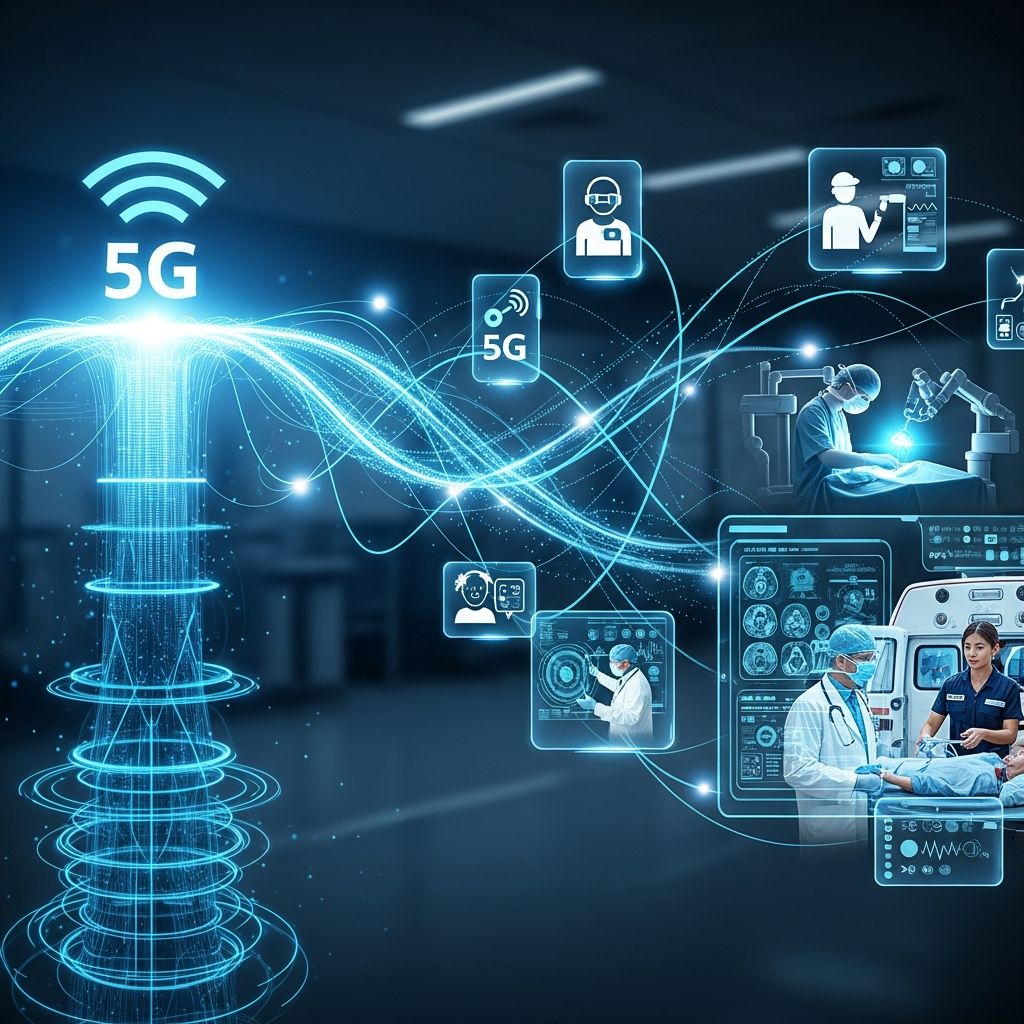
Imagine a world where medical consultations happen seamlessly from anywhere, surgeries are performed across continents with pinpoint accuracy, and patient data flows instantly to save lives. This is not science fiction—it’s the reality unfolding with 5G technology. With its ultra-low latency, massive bandwidth, and ability to connect countless devices simultaneously, 5G is poised to overhaul healthcare delivery, making it more accessible, efficient, and personalized.
Core Advantages of 5G in Medical Environments
At the heart of 5G’s appeal for healthcare lies its technical superiority over previous generations. Speeds up to 100 times faster than 4G allow for the transmission of high-resolution medical images, videos, and sensor data in seconds. Latency drops to mere milliseconds, critical for time-sensitive interventions.
- High Bandwidth: Supports streaming of 4K ultrasounds or MRIs without lag.
- Low Latency: Enables real-time responsiveness in robotic operations.
- Massive Device Connectivity: Handles thousands of IoT sensors in a single hospital ward.
- Network Slicing: Creates virtual networks for prioritized emergency traffic.
These features address longstanding challenges like rural healthcare deserts and overburdened urban facilities. According to Markets and Markets, 5G healthcare revenue is projected to hit $3.67 billion by 2026, underscoring its economic momentum.
Telemedicine Elevated by Next-Gen Connectivity
Telemedicine exploded during the COVID-19 era, but 5G takes it to new heights. No longer limited to basic video calls, providers can now conduct high-definition examinations remotely. Patients in remote areas connect with specialists via crystal-clear feeds, complete with augmented reality overlays for precise diagnostics.
For instance, connected ambulances equipped with 5G stream live vitals and body-cam footage to trauma centers en route. This allows clinicians to prepare operating rooms and assemble teams before arrival, potentially slashing response times by minutes that count as hours in emergencies.
High-definition virtual consultations benefit from 5G’s mobility and reliability, outperforming Wi-Fi or 4G. Patients receive two-way HD interactions on the go, fostering adherence to treatment plans through video-enabled medication reminders.
Remote Patient Monitoring: Always-On Care
Chronic conditions like diabetes and heart disease affect millions, requiring constant vigilance. 5G-powered wearables and sensors provide continuous monitoring without tethering patients to clinics. Devices track glucose levels, heart rhythms, or oxygen saturation, alerting doctors to anomalies instantly.
This shift empowers home-based care, reducing hospital readmissions. Deloitte highlights how 5G enables patients to engage with their health data anytime, supporting large-file exchanges like HD scans. A 360-degree patient view emerges from FAIR data principles—findable, accessible, interoperable, reusable—predicting health trajectories proactively.
Security is paramount; private 5G networks and slicing ensure HIPAA compliance, with AI detecting threats in real-time.
Connected Ambulances and Emergency Response
In emergencies, every second matters. 5G turns ambulances into mobile ICUs, relaying real-time data from onboard diagnostics to hospitals. Paramedics transmit ECGs, ultrasounds, or even AR-guided instructions, enabling preemptive care.
Low latency ensures split-second decisions, while high bandwidth prevents video buffering from body cams. STL Partners notes this use case demands 5G’s edge for live streaming without quality loss, transforming field responses.
Precision Remote Surgery and Robotics
Remote surgery, or telesurgery, was once experimental; 5G makes it viable. Surgeons control robotic arms miles away with haptic feedback, low jitter minimizing nausea or errors. A PMC study on 5G in healthcare describes its role in safety-critical applications, matching central expertise to remote needs.
Trials show examiners performing contactless ultrasounds, protecting against infections. Future haptic advancements will refine robot-assisted minimally invasive surgery (RAMIS), expanding access to top surgeons globally.
IoT and Wearables: The Backbone of Smart Health
5G’s IoT capacity connects wearables, implants, and equipment seamlessly. Sensors in smart pills monitor drug absorption; hospital beds detect falls. MDIC’s landscape analysis covers 5G-enabled robotics, XR simulations, and mobile units, identifying gaps to bridge for patient safety.
RedCap technology offers cost-effective mid-tier speeds for these devices, filling gaps between high-end and basic IoT.
| Feature | 4G | 5G |
|---|---|---|
| Latency | 20-30ms | <1ms |
| Device Density | ~1,000/km² | 1M/km² |
| Bandwidth | 100Mbps | 20Gbps |
| Key Use | Basic Monitoring | Real-Time Surgery |
AI Synergy: Predictive and Personalized Medicine
5G + AI = revolutionized diagnostics. IDC research shows up to 20% cost reductions via accurate predictions. Real-time analysis of patient data forecasts outbreaks, manages beds, and flags complications. Fraud detection and anomaly spotting in security cams enhance safety.
In drug design, 5G speeds high-throughput processing of MRI/CT scans or in-silico screenings.
Edge Computing and Data Democratization
Pairing 5G with edge computing processes data near the source, cutting delays. Hospitals gain 360-degree insights, shifting care homeward for convenience and cost savings.
Overcoming Barriers to Widespread Adoption
Challenges persist: infrastructure costs, spectrum allocation, and cybersecurity. Regulatory alignment with HIPAA is key. Yet, pilots worldwide prove feasibility.
Future Horizons: 6G and Beyond
Looking ahead, 6G promises immersive XR for training and holograms. But 5G lays the foundation now.
FAQs
What is the biggest benefit of 5G for healthcare?
Ultra-low latency enabling real-time applications like remote surgery and monitoring.
How does 5G improve telemedicine?
By providing HD, mobile, reliable connections for consultations anywhere.
Is 5G secure for patient data?
Yes, via network slicing and private networks ensuring compliance and threat detection.
When will 5G healthcare go mainstream?
Projections indicate significant growth by 2026, with ongoing deployments.
Can 5G help rural areas?
Absolutely, bridging gaps through connected ambulances and remote specialist access.
References
- 5G Use in Healthcare: The Future is Present — Adnan et al., PMC. 2022-01-18. https://pmc.ncbi.nlm.nih.gov/articles/PMC8764898/
- Landscape Analysis of 5G in Healthcare — Medical Device Innovation Consortium (MDIC). 2023. https://mdic.org/our-work/5g-enabled-healthcare/
- How 5G and AI are shaping the future of eHealth — Tecnotree. 2024. https://www.tecnotree.com/future/blog/the-digital-transformation-of-payments-empowering-telecoms-and-beyond-2/
- 10 5G Healthcare use cases transforming digital health — STL Partners. 2023. https://stlpartners.com/articles/digital-health/10-5g-healthcare-use-cases/
- 5G Edge Transformation for Health Care Providers — Deloitte. 2024. https://www.deloitte.com/us/en/industries/life-sciences-health-care/articles/future-of-healthcare-technology.html
Similar Articles







Read full bio of medha deb